A listing is not a sale and a registered account is not a customer. The Rydox court record contains both measures, and the gap between them is the story that the word marketplace hides.
A clean result from an automated check is not an observation about the site. It is a decision the operator made about the checker, and this chain makes that decision at three independent points.
Migrating away from a processor removes the future risk and leaves the historic risk exactly where it was. Storage limitation is a legal duty, and it is also the only thing that would have helped here.
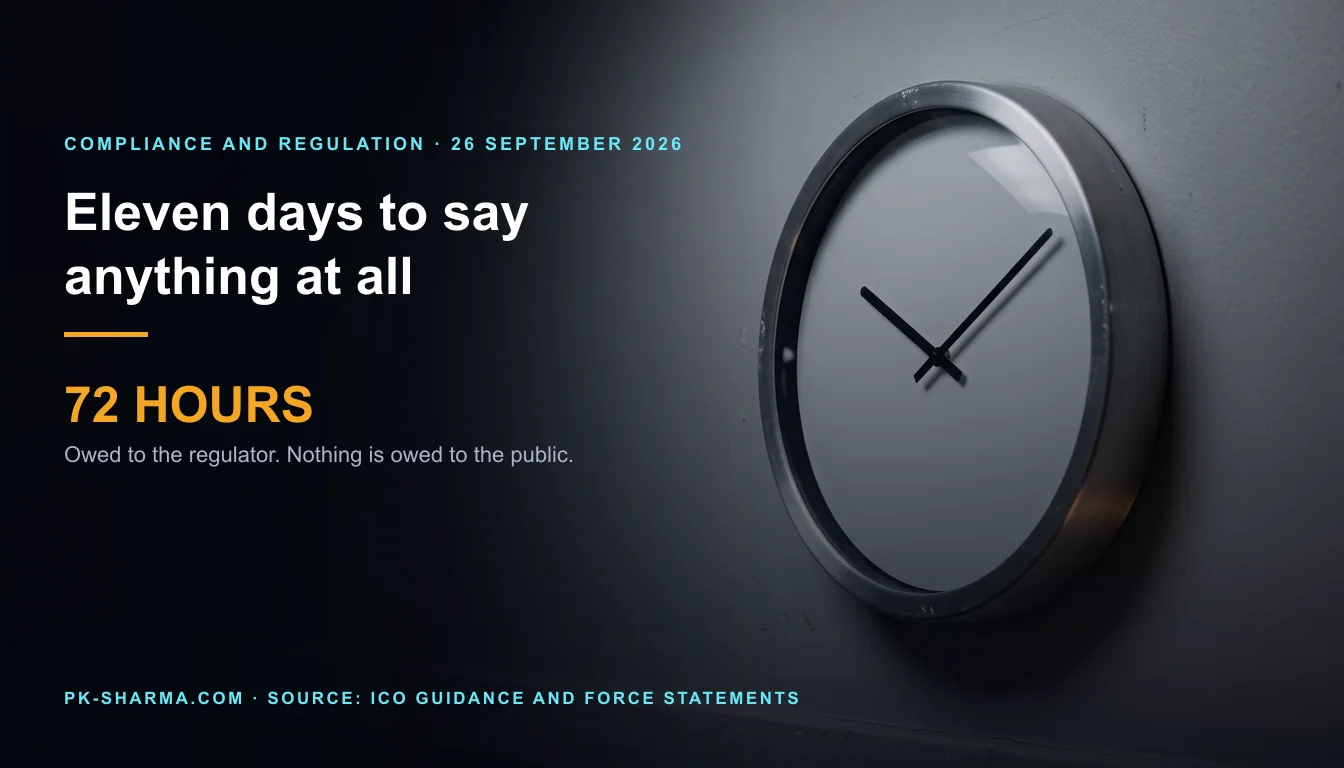
The reassurance is about the public, whose data the force says shows no evidence of compromise. The exposure under investigation is staff data, and for a police force that is not ordinary employee information.
The impersonated products do not exist: none of the three payroll platforms ships a desktop app. Allure Security counted 291 downloads and said plainly that some of them were researchers.
Nobody in this story was slow. The flaw is a CSRF check that skips validation whenever a literal string appears anywhere in the request URI, and the query string is written by whoever composes the link.
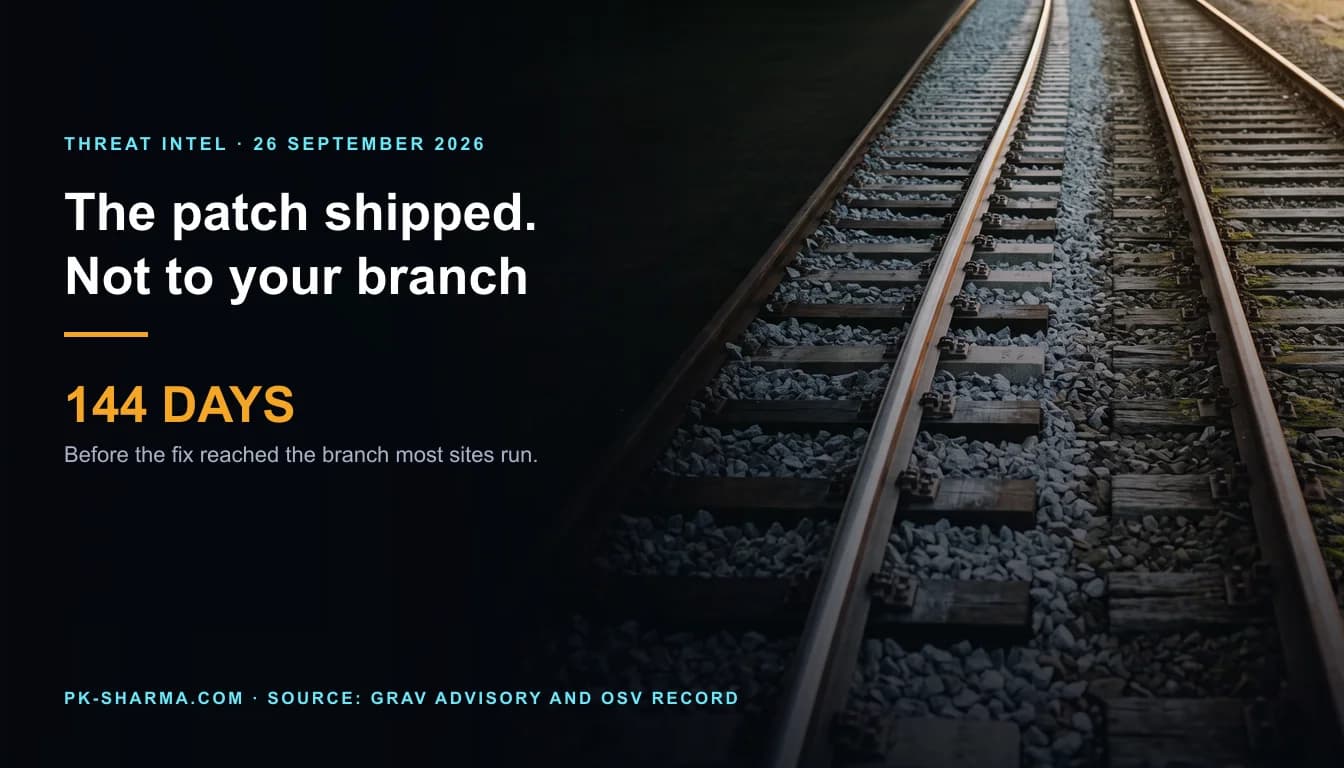
What eventually forced the backport was a ransomware gang's leak site being defaced. Grav shipped a 1.7 fix the day after the details became public, 144 days after the advisory.
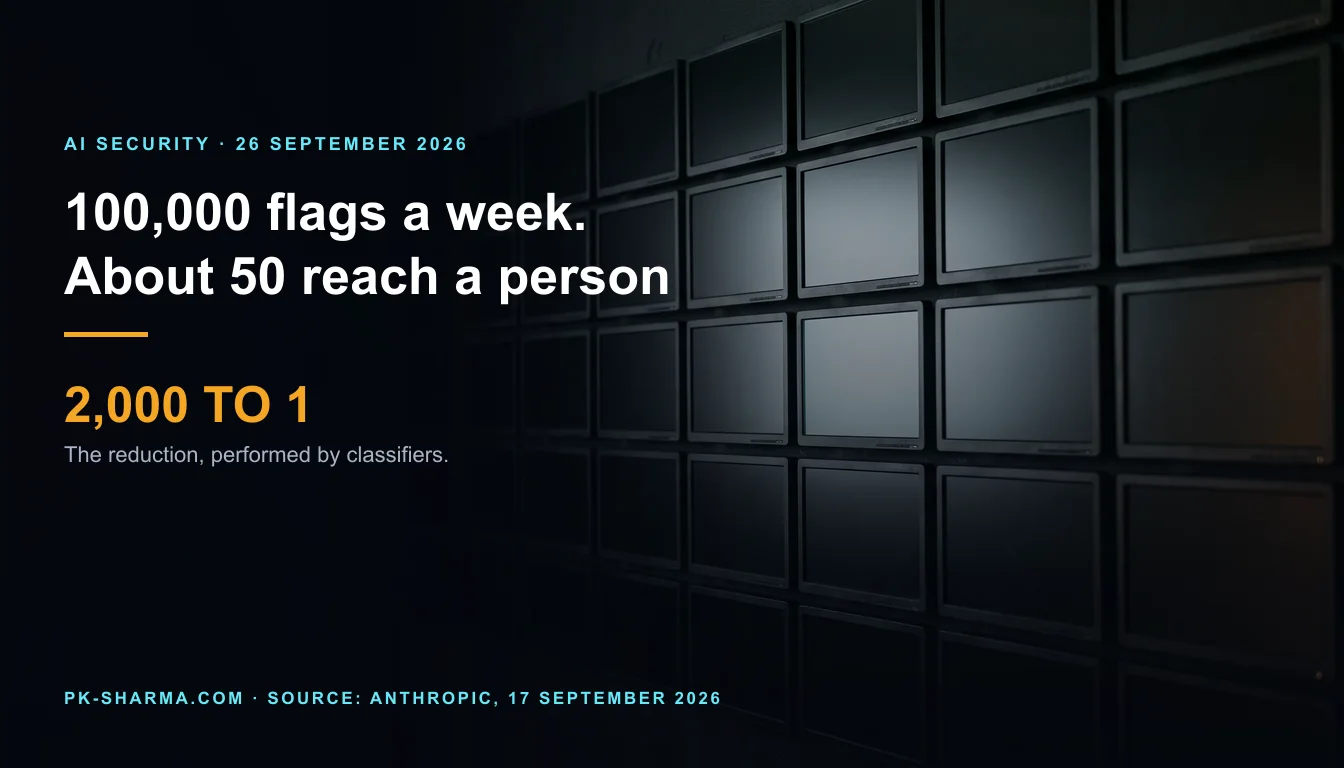
A blocked rate is not an error rate and not a danger rate. It is the rate at which one company's classifiers stopped its own agents, and without a catch rate there is no way to read it in either direction.
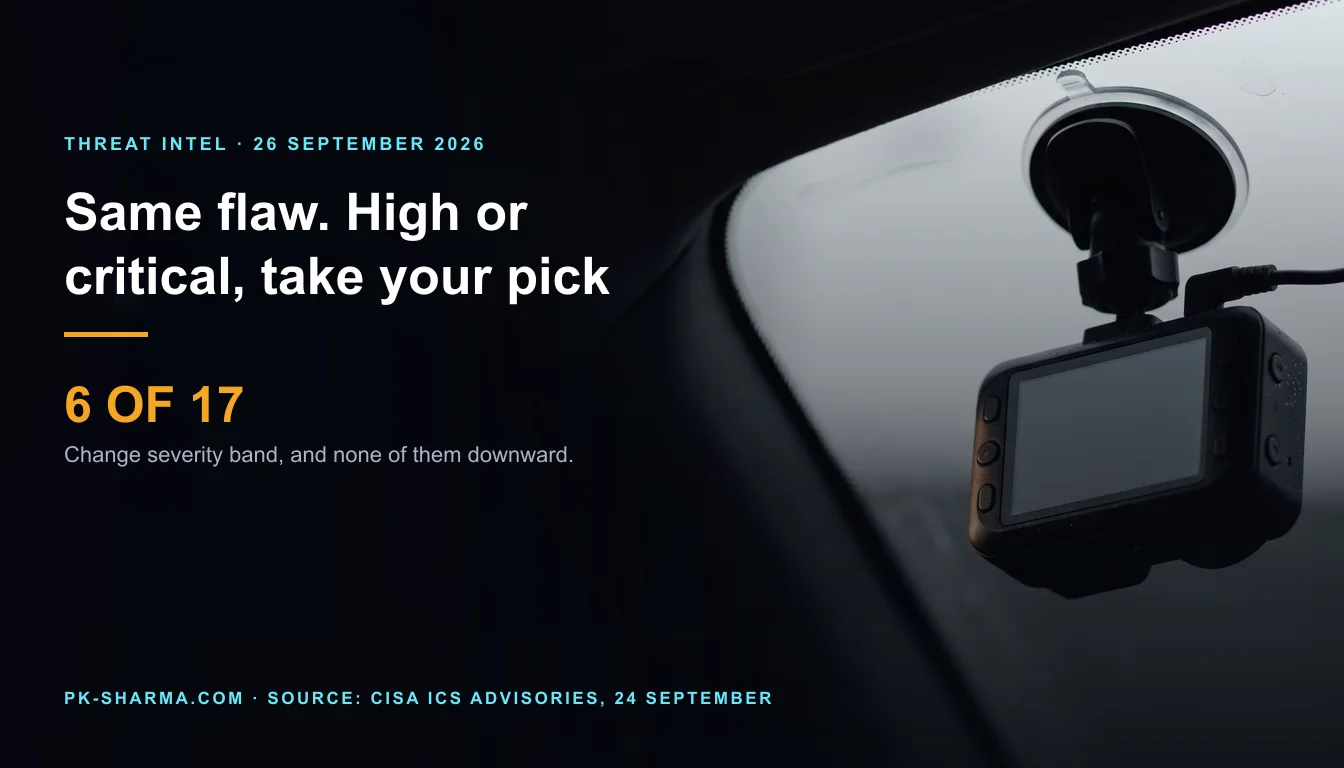
The flaw that gains the most, 8.1 to 9.2, is a firmware verification weakness on a dashcam with no fix, from a vendor that has not responded to CISA. A robot vacuum is filed under Information Technology.
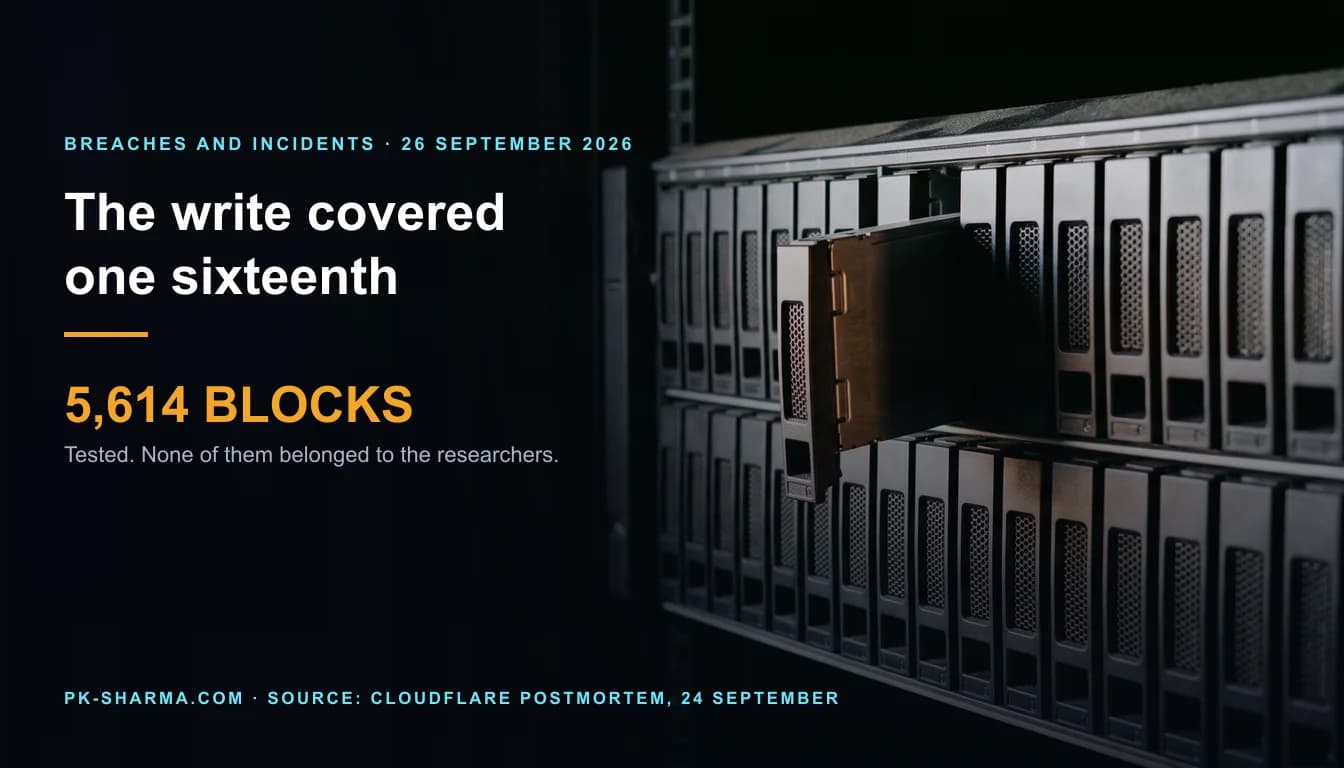
Firecracker per container is the strongest isolation on the market and it was not the boundary that mattered. A flag set for performance let a 4 KiB write expose the other 60 KiB of somebody else's block.
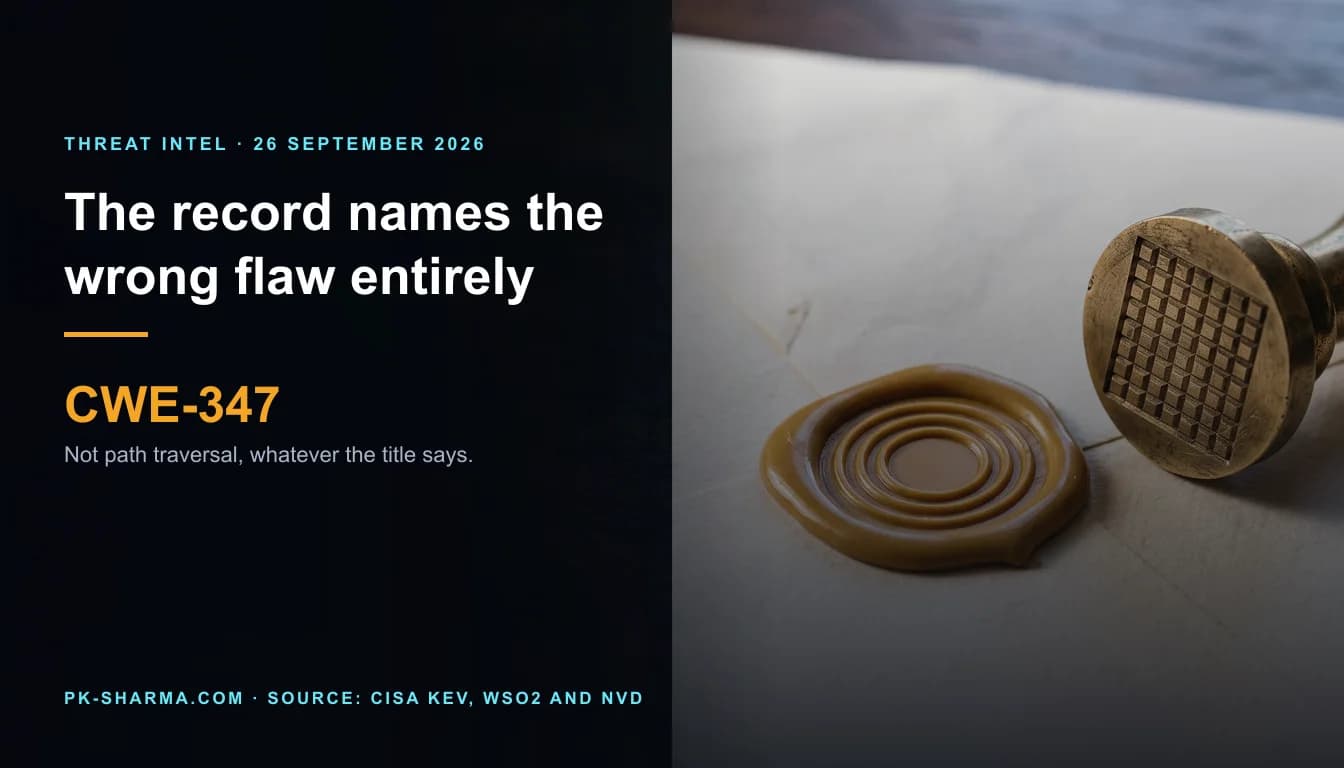
The structured data is right and the prose is wrong, which is the failure mode of every hand-written label sitting beside machine-readable fields. A team triaging by name goes hunting for the wrong thing.
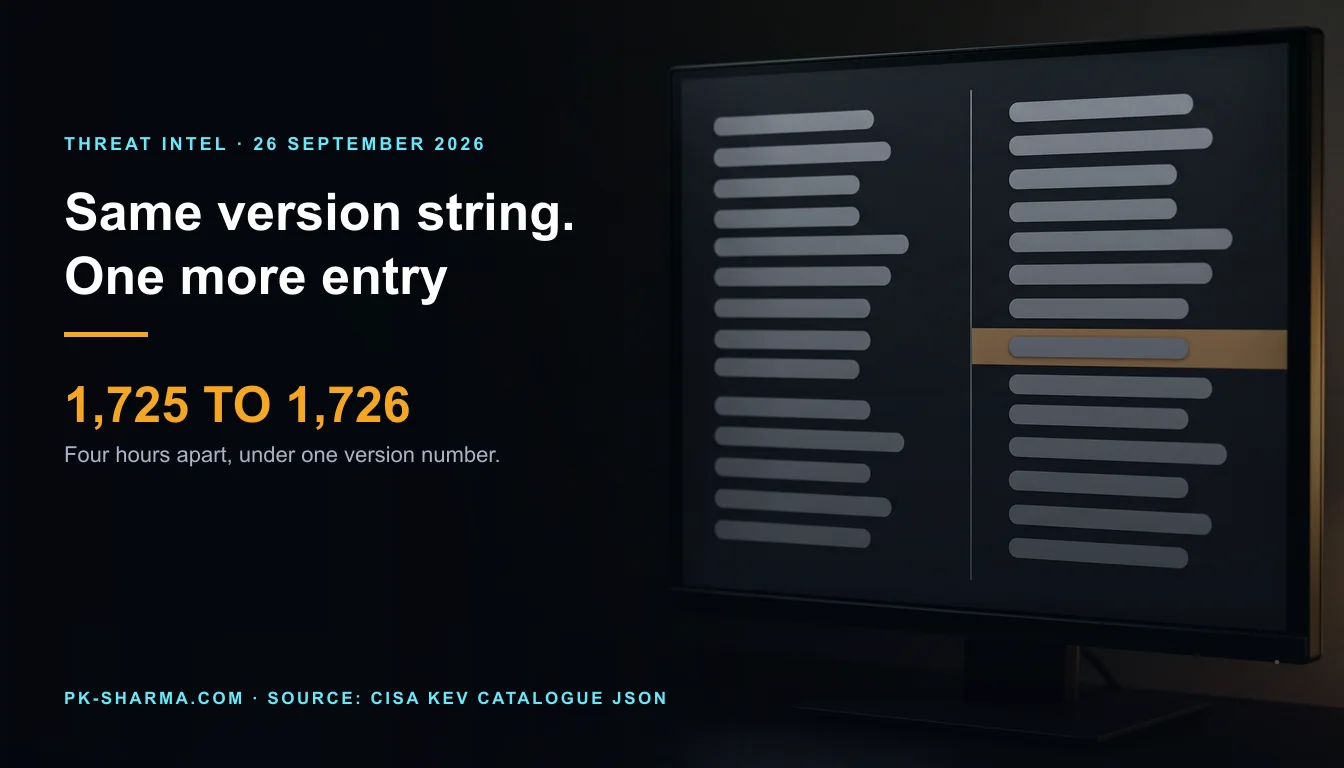
Anything that caches on the version saw no change. The third entry is a WordPress Core remote file inclusion flagged for forensic triage, and a day later the trade press was still reporting two.
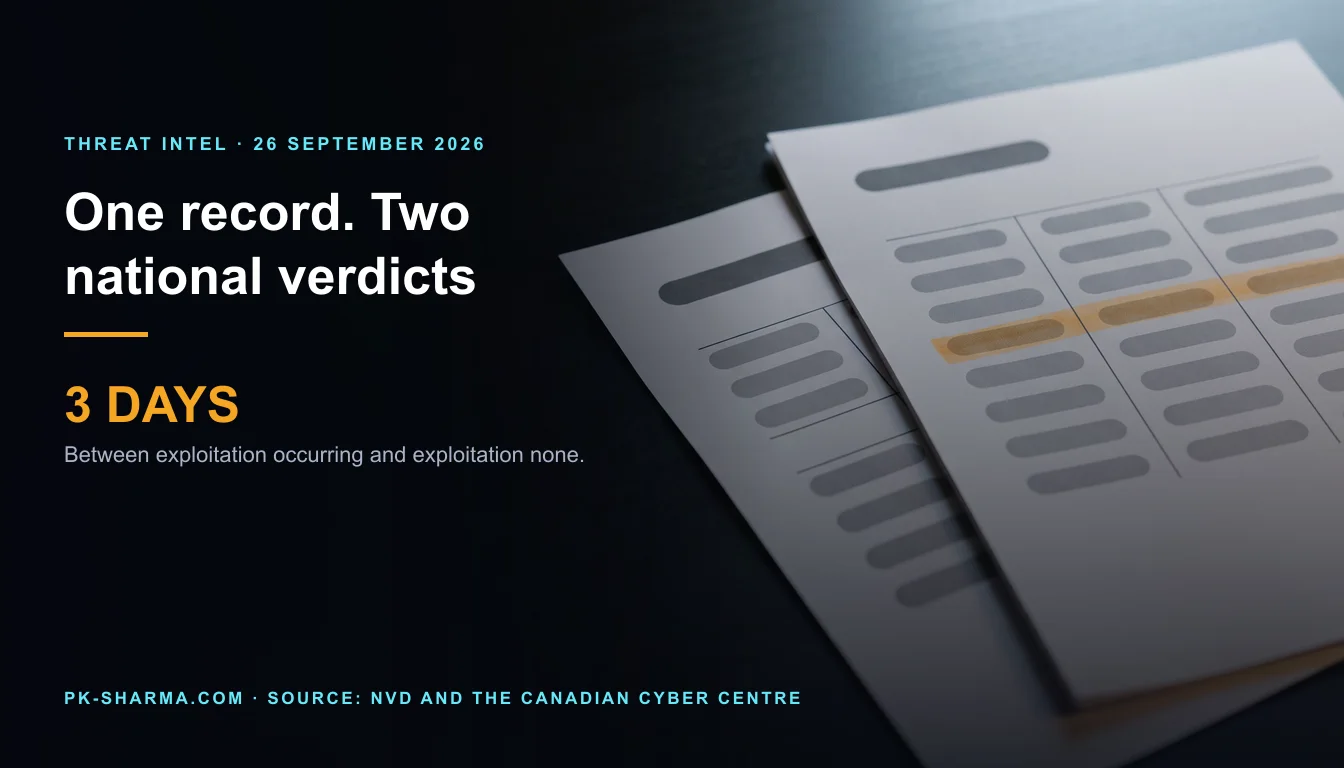
Two allied national cyber bodies, one CVE, three days apart, opposite conclusions. Neither is reading a sensor. Both are reasoning over the same thin public record, which is the part worth understanding.
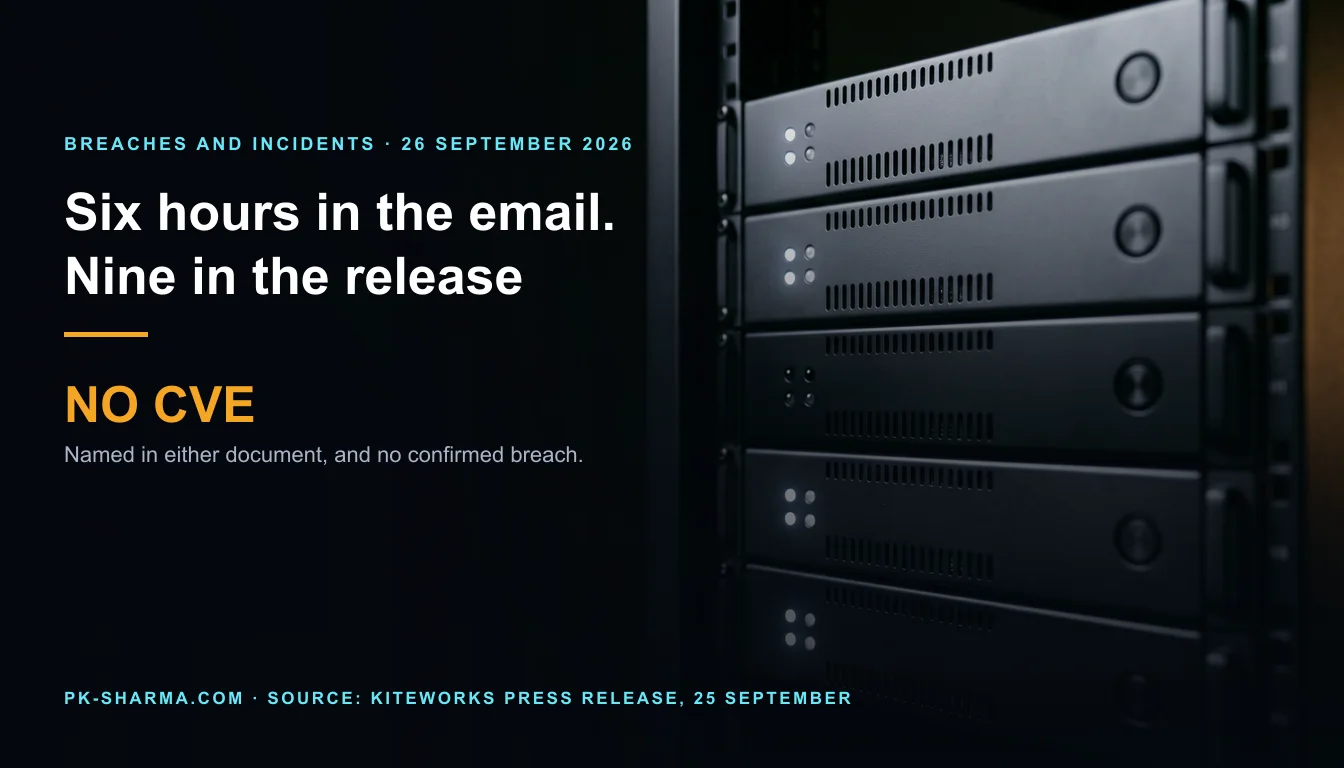
The public release says nine hours and federal intelligence authorities. The customer email, as quoted, says six hours and law enforcement. Both cannot be the number a defender acts on.
A fake verification page that verifies nothing, measured by a panel that counts interface progress and labels it execution. The gap between an event and the thing it is named after is the entire story.
Two controls are not implemented at all, one is a stub that reports success without reading anything, and the self destruct does not uninstall or undo the damage. Your own device management console is read exactly the same way.
An indicator of compromise is a retrospective artefact. Publishing one says compromise is possible and checkable. Every tool that triages on the exploitation field saw nothing for 47 days.
Nobody had to jailbreak anything. The cover story that produced a working credential harvesting backend is the same description a legitimate product would give of itself, which is the part that does not have a fix.
The exchange published two different loss figures within 24 hours, 351.6 million and 387.5 million, against a protection fund of over 464 million. The gap matters less than what the mechanism says about where custody controls stop.
Neither vendor says they are the same thing, and a shared builder sold as a service would explain it too. Either way, a defender reading one report and not the other is missing half the indicators.
Shadowserver counts about 160 exposed TeamCity servers still unpatched, down from roughly 700. The remaining ones hold build credentials and sign artefacts.
Every workflow referencing either action by tag rather than by commit SHA resumed running the payload on its next trigger, inside the runner, with the workflow's token and secrets.
September now stands at 38 additions to the catalogue, 30 of them on a three day clock. The clock starts when CISA notices, not when the flaw became dangerous.
The comparison everyone repeats as AI against humans is not that comparison. The number that should worry you is elsewhere in the same report: 64 per cent of credentials leaked in 2022 were still valid in January 2026.
Minor infringements generally get a reprimand. Anything else carries a strong presumption that a fine should be imposed. The guidelines are open to consultation until 13 November.
Roundcube has eleven entries in the CISA exploited catalogue, more than any other webmail. This one is not among them, four days after a national cyber centre warned about it.
The researcher agreed to hold publication until 17 September. He asked for an update twice and got no reply. He published on the 24th, with no CVE and no patch in existence.
A Google engineer wrote Nice catch and filed it. Eleven days later a panel called it working as intended. The case is still open at P1 and S1, and the researcher's page says it is still unpatched.
A watch on the root of C: reports filesystem events across every user, with filenames, regardless of permissions. That was enough to identify which of the top 1,000 sites another user was visiting, with an F1 score of 97.8 per cent.
The vulnerability was not a bug in the model. It was two safety controls that the shipped template did not have, and it took 112 days from report to the last fix.
ThreatDown recovered 4.3 GB from an unauthenticated registry, spanning October 2024 to August 2026. The interesting part is not the botnet. It is that the crew used somebody else's agent framework and only wrote the prompt.
Over a billion agent decisions in August, about 20,000 blocked, and roughly 100,000 transcripts flagged a week of which about 50 reach a human. Anthropic names the missing metric itself.
A defender triaging by the catalogue's own words would hunt for a file upload path. The flaw hands over an administrator session to anyone who signs a token with an algorithm the server never supported.
Cloudflare has fixed a cross tenant exposure in Containers and Sandboxes. The flag took six hours to change. Clearing the blocks already mapped took fifteen days.
September is the busiest month of 2026 in the Known Exploited Vulnerabilities catalogue, at 1.48 additions a day against a yearly mean of 0.89. The deadline never varies with how hard the change is.