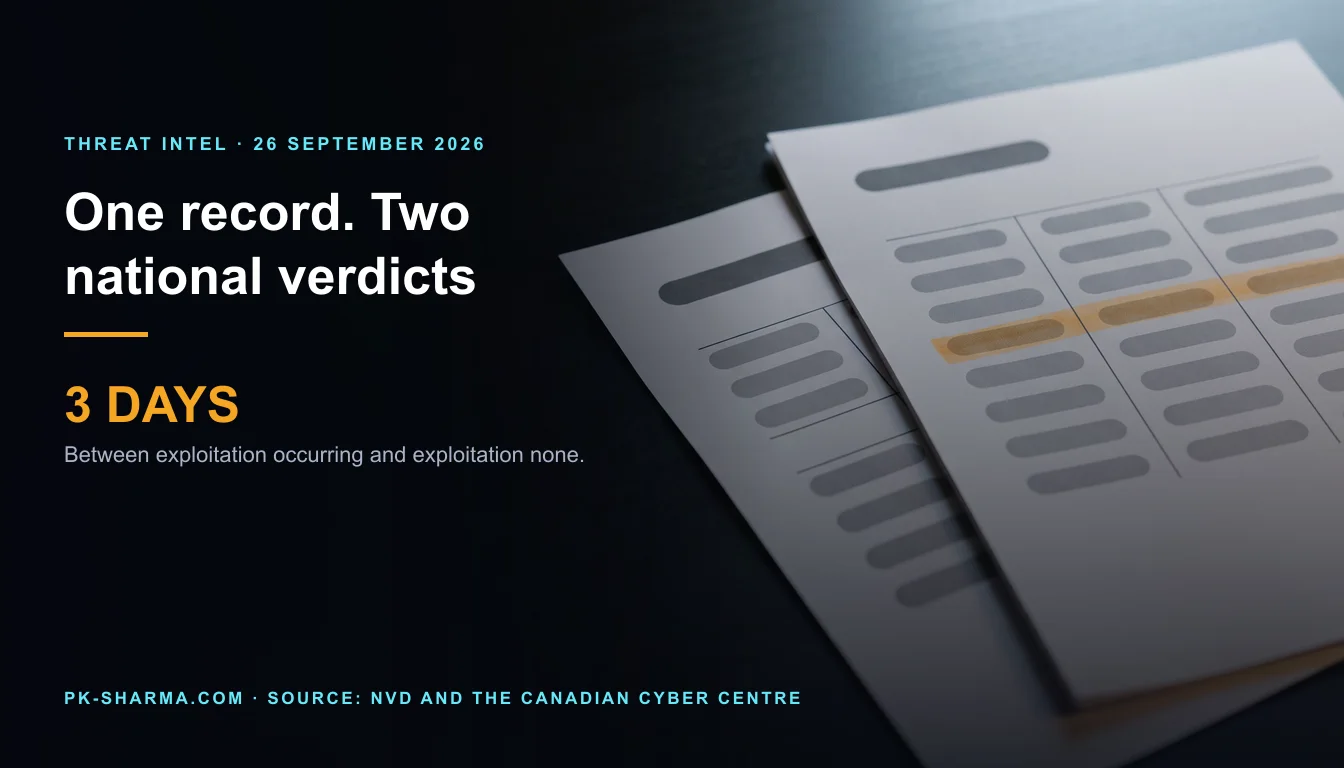
Two allied national cyber bodies, one CVE, three days apart, opposite conclusions. Neither is reading a sensor. Both are reasoning over the same thin public record, which is the part worth understanding.
The public release says nine hours and federal intelligence authorities. The customer email, as quoted, says six hours and law enforcement. Both cannot be the number a defender acts on.
A fake verification page that verifies nothing, measured by a panel that counts interface progress and labels it execution. The gap between an event and the thing it is named after is the entire story.
Two controls are not implemented at all, one is a stub that reports success without reading anything, and the self destruct does not uninstall or undo the damage. Your own device management console is read exactly the same way.
An indicator of compromise is a retrospective artefact. Publishing one says compromise is possible and checkable. Every tool that triages on the exploitation field saw nothing for 47 days.
Nobody had to jailbreak anything. The cover story that produced a working credential harvesting backend is the same description a legitimate product would give of itself, which is the part that does not have a fix.
The exchange published two different loss figures within 24 hours, 351.6 million and 387.5 million, against a protection fund of over 464 million. The gap matters less than what the mechanism says about where custody controls stop.
Neither vendor says they are the same thing, and a shared builder sold as a service would explain it too. Either way, a defender reading one report and not the other is missing half the indicators.
Shadowserver counts about 160 exposed TeamCity servers still unpatched, down from roughly 700. The remaining ones hold build credentials and sign artefacts.
Every workflow referencing either action by tag rather than by commit SHA resumed running the payload on its next trigger, inside the runner, with the workflow's token and secrets.
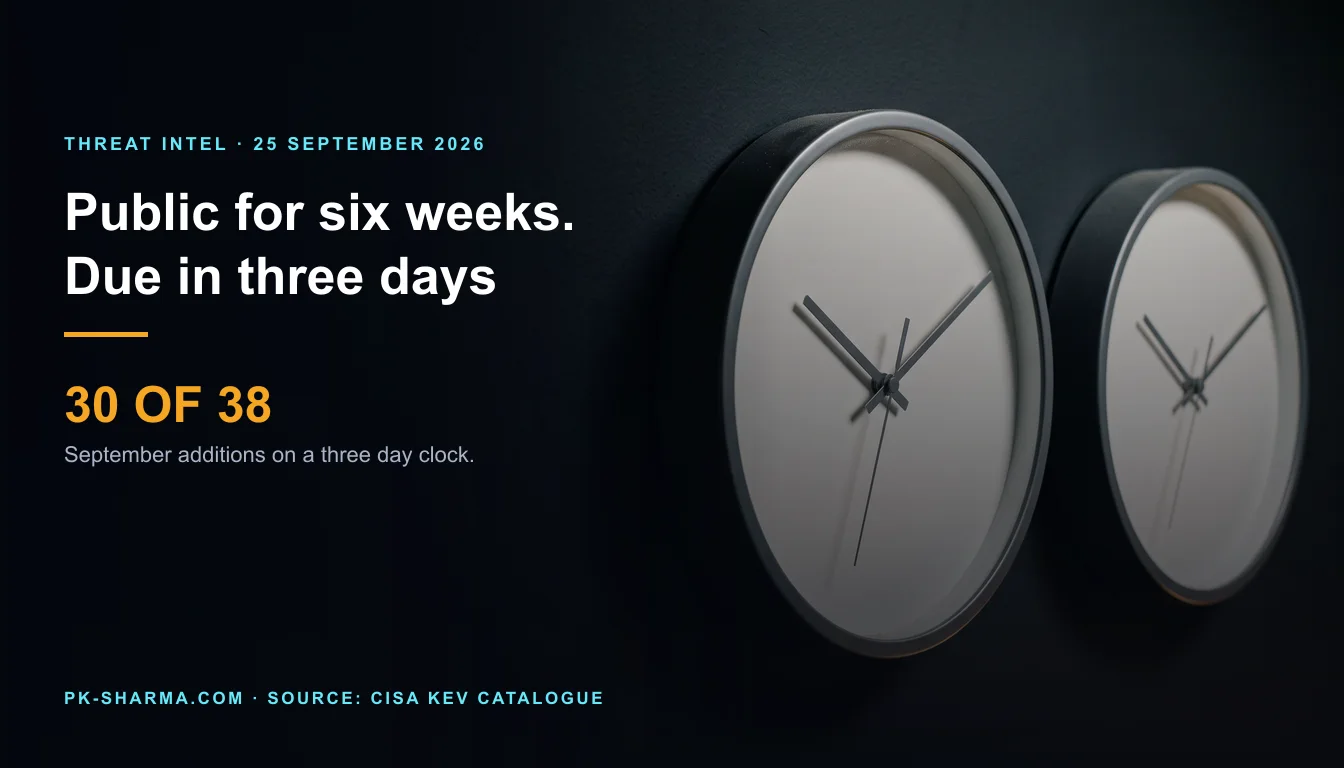
September now stands at 38 additions to the catalogue, 30 of them on a three day clock. The clock starts when CISA notices, not when the flaw became dangerous.
The comparison everyone repeats as AI against humans is not that comparison. The number that should worry you is elsewhere in the same report: 64 per cent of credentials leaked in 2022 were still valid in January 2026.