An indicator of compromise is a retrospective artefact. Publishing one says compromise is possible and checkable. Every tool that triages on the exploitation field saw nothing for 47 days.
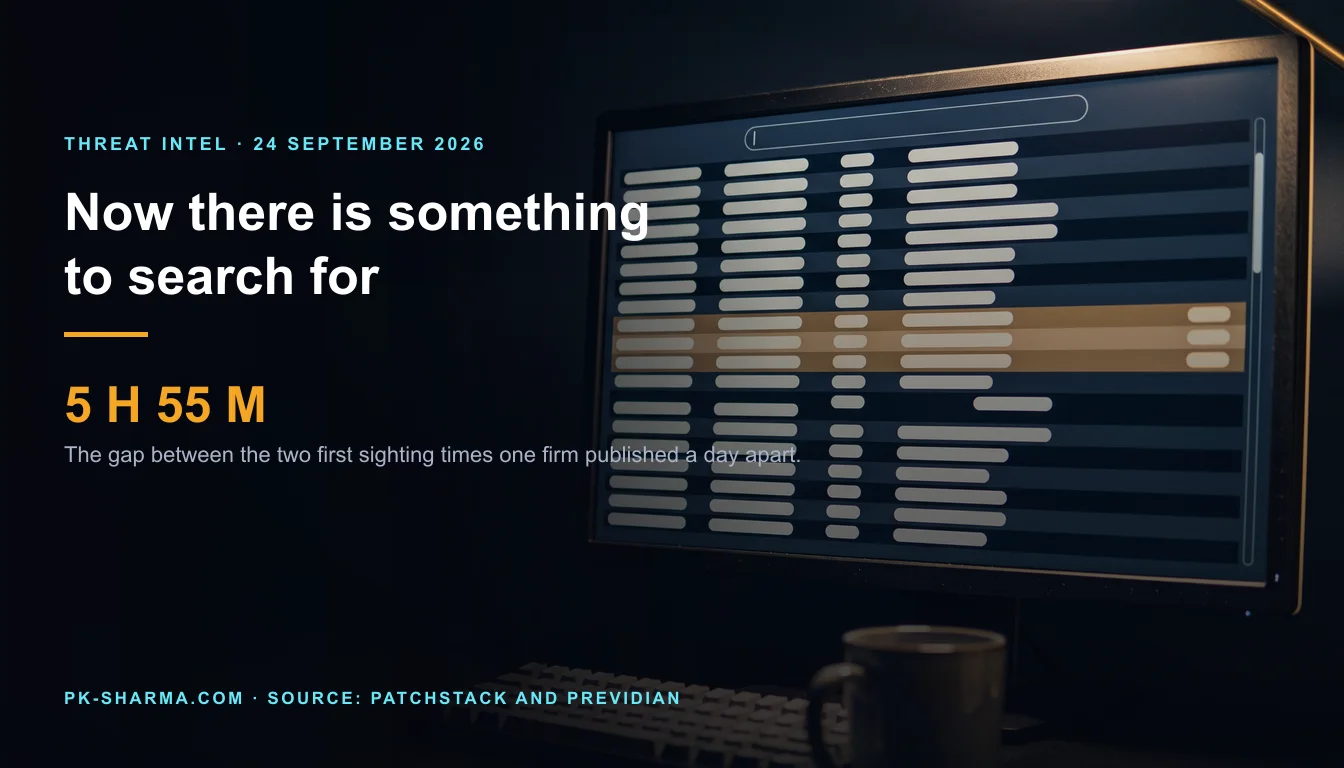
Neither vendor says they are the same thing, and a shared builder sold as a service would explain it too. Either way, a defender reading one report and not the other is missing half the indicators.
Shadowserver counts about 160 exposed TeamCity servers still unpatched, down from roughly 700. The remaining ones hold build credentials and sign artefacts.
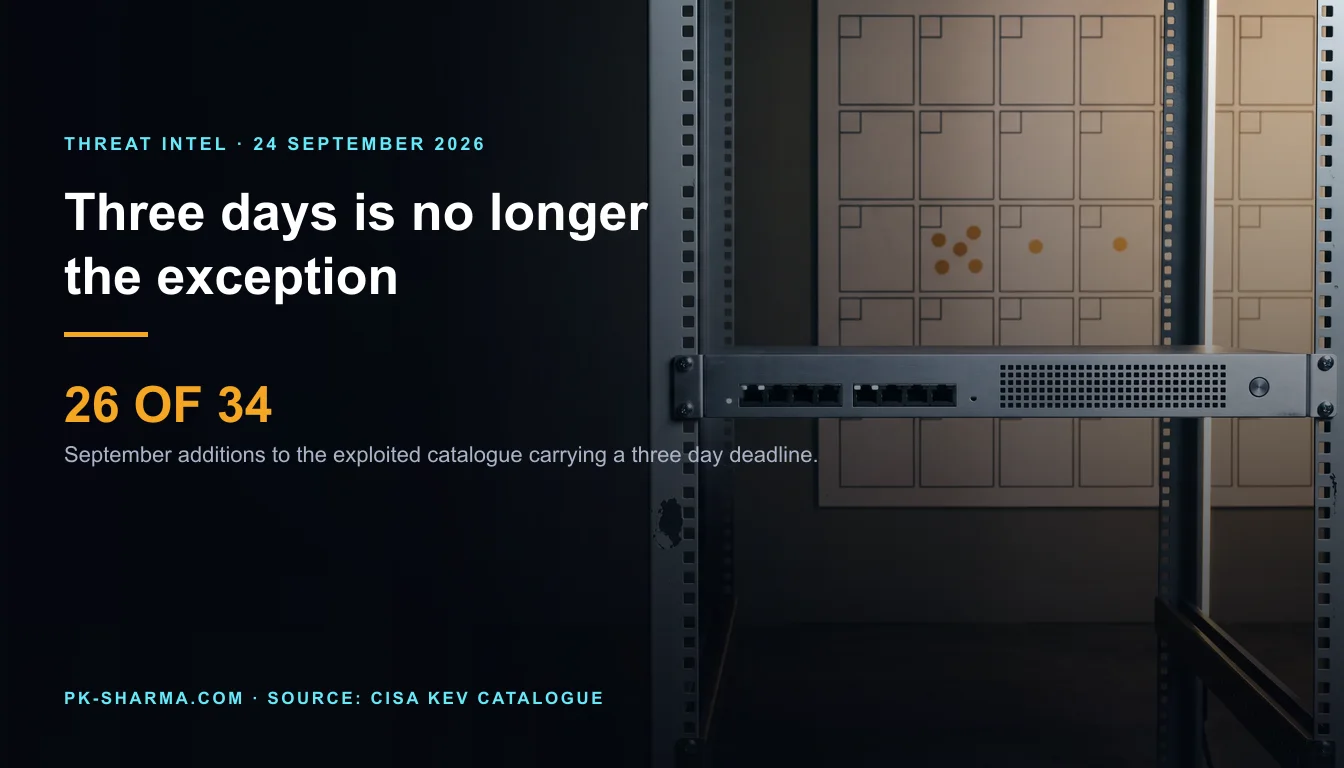
September now stands at 38 additions to the catalogue, 30 of them on a three day clock. The clock starts when CISA notices, not when the flaw became dangerous.
Roundcube has eleven entries in the CISA exploited catalogue, more than any other webmail. This one is not among them, four days after a national cyber centre warned about it.
A watch on the root of C: reports filesystem events across every user, with filenames, regardless of permissions. That was enough to identify which of the top 1,000 sites another user was visiting, with an F1 score of 97.8 per cent.
A defender triaging by the catalogue's own words would hunt for a file upload path. The flaw hands over an administrator session to anyone who signs a token with an algorithm the server never supported.
September is the busiest month of 2026 in the Known Exploited Vulnerabilities catalogue, at 1.48 additions a day against a yearly mean of 0.89. The deadline never varies with how hard the change is.
Six of the seven fell inside seven minutes, which is not guessing. It is one provisioning default, used repeatedly, on accounts nobody had looked at in years.
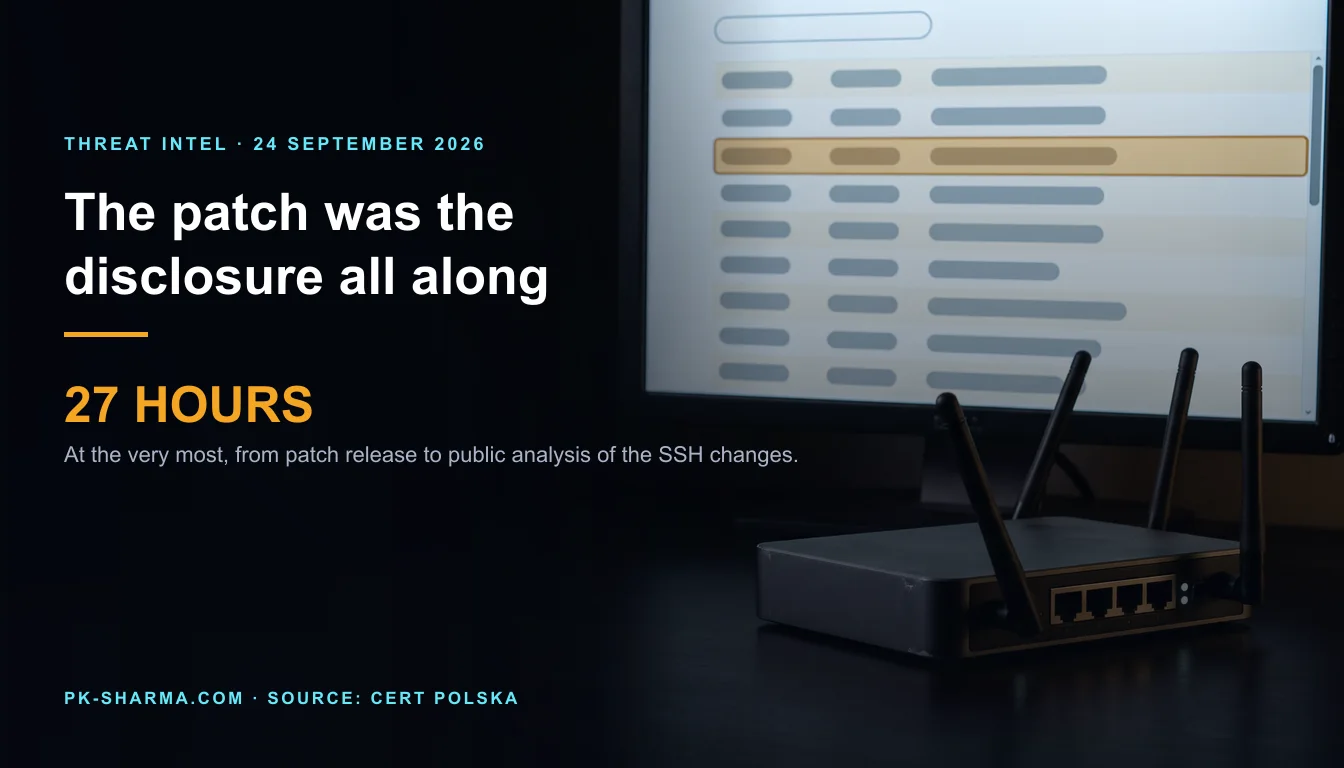
CERT Polska has published the full MikroTrick chain. The interesting part is not the bug. It is how little time withholding the details actually bought anyone.
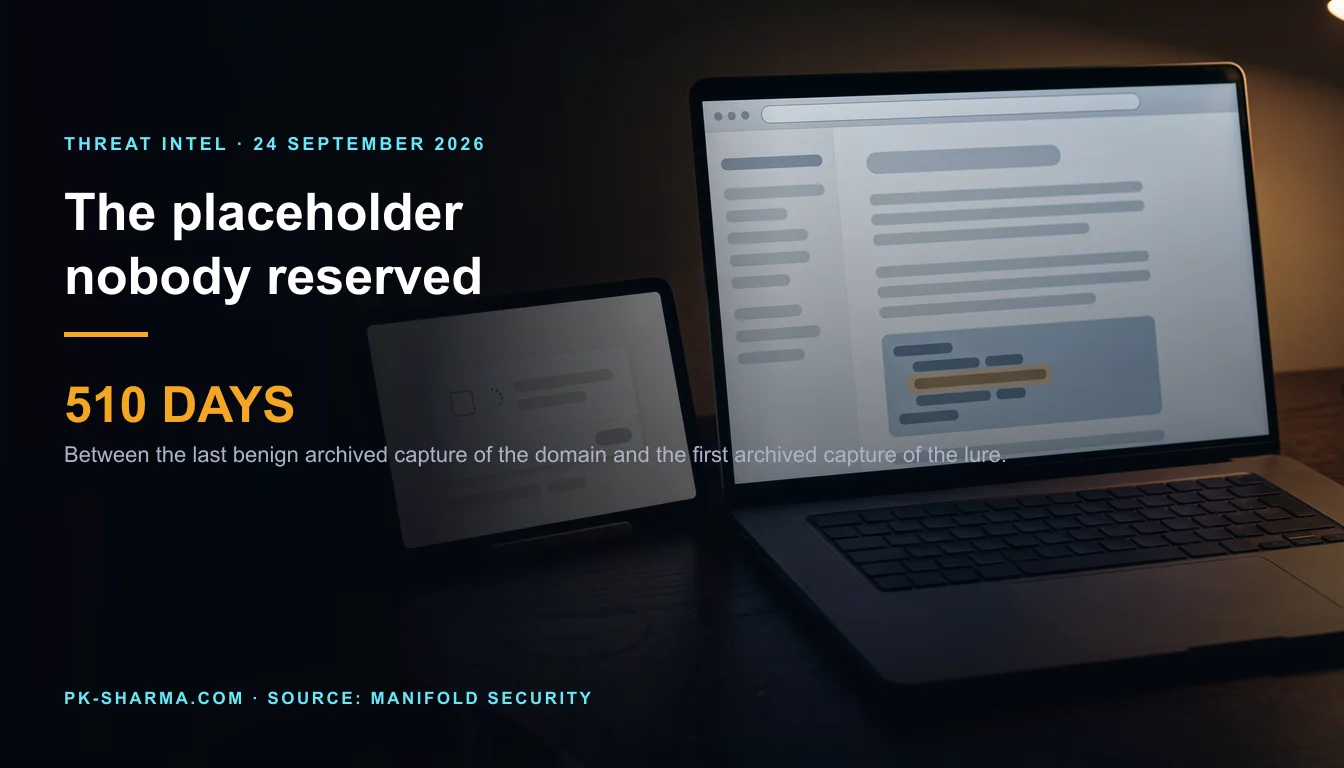
Reserved names exist so copied example code cannot reach a live host. Somebody used a real domain instead. Every outbound request to it is now both an exposure and, usefully, a near zero false positive detection.
Yesterday the advisory gave defenders nothing to search for. Today there are request, response and file indicators, all of them from two firms selling protection. The vendor, the CISA KEV catalogue and the NVD record still say nothing happened.
The TrustSink technique does not extract passwords from Entra. It asks users for them a second time, on a full page a third party draws inside a trusted sign-in, and Entra validates only the token that comes back.
Microsoft says it typically publishes definitions three times a day, and its device health report treats a signature build as current for seven days. A blocked machine can therefore sit about twenty releases behind and still read as protected.
The token inside a GitLab issue by email address does not expire, covers every project the account can reach, and is exempt from IP restrictions. Seven properties, six documentation pages, and one copy button.
The only precise figure the fake Claude Max giveaway publishes is 92.5 per cent of slots gone, and it is generated in the visitor's browser. What the research does not establish matters more than what it does.
The second WordPress core security release in five days fixes an unauthenticated path traversal that selects a PHP file to run, not to read. Two preconditions must hold, and the hardening constant that mattered last week does nothing here.
Two of the four new KEV entries name Check Point, but only one is the management server. The take that fixes the other is the top of the vulnerable range for it. What the four advisories do not state matters more than what they do.
Nine ICS advisories, six of them republished Siemens notices, one flaw already on the known exploited list since May, and two fixes that no vendor can simply install. A prioritisation guide for UK OT owners.
D-Link has acknowledged two critical DIR-822A flaws with public exploit code, but the bulletin confirms no hardware revision, no lifecycle status and no firmware fix. The UK PSTI regime would not have helped the owners either.
A guest to host escape in Linux KVM on ARM64 reached shipping kernels on 28 September 2025 and was fixed in stable on 11 September 2026. Who is exposed comes down to one boot parameter.
Microsoft relabelled CVE-2026-65660 from spoofing (6.5) to remote code execution (8.8) 16 days after release. The fix was always in the August updates; the risk is teams that sorted by the first label.
A second exploited CVSS 10.0 flaw in on-premises VeloCloud Orchestrator in 57 days. Here is how to tell if you are exposed, the patch path by release train, and what Arista says to look for in your logs.