A fake Zoom disk image runs its backdoor on a password the victim types. Jamf names no vulnerability, victim, actor or delivery route, and never saw the cloudsyncd daemon in use.
The headline speed claim cannot be checked from the report. Its other pages give 5.3 hours, single-digit days, about five days and 30 to 60 days for other clocks, and CISA's catalogue gives a median of 3 days for new flaws, 1 day lately.
The fix is 80 days old, six CVEs shipped with it, CISA's catalogue does not list the flaw, and the exploitation evidence is one firm's sensors. What the record establishes, what it leaves open, and what UK teams running HFS should do.
Four in five of DTU's up to 200,000 are former users, and the six-month deletion covers addresses, pictures and next of kin, not the CPR number. What the notice states, what it leaves out, and the checks a UK team can run.
The 100+ is OpenAI's own count of private notices. Researchers' lists of 55 and 15 sites come from public scan records, and OpenAI declined to say how far they overlap. What is stated, what is not, and what a UK site operator should check.
By Talos’s intervals one Antino implant makes about 10,080 Graph requests a day, to hostnames enterprises commonly allow. What the report states, what it leaves out, and which controls fit a channel whose mailbox the actor owns.
Warlock's latest victims include a water utility and a telecom provider. The report names only the 2025 ToolShell flaws, so a build number and a hunt for stolen machine keys matter more than any CVE list.
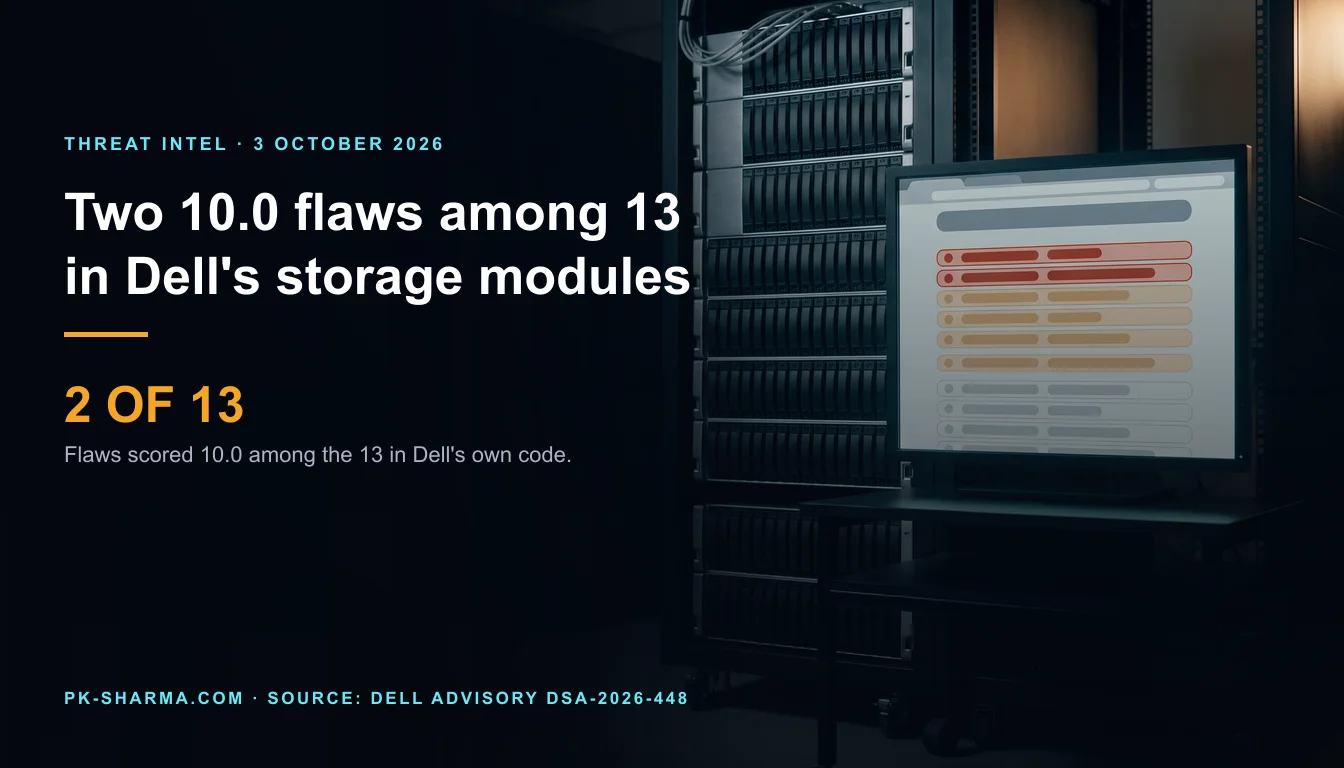
The two 10.0 flaws are unauthenticated and sit in CSM Authorization, the proxy that holds the array credentials. Root on nodes is a different 9.9 in the operator. Dell names one fix, 1.18.0, and says nothing on exploitation.
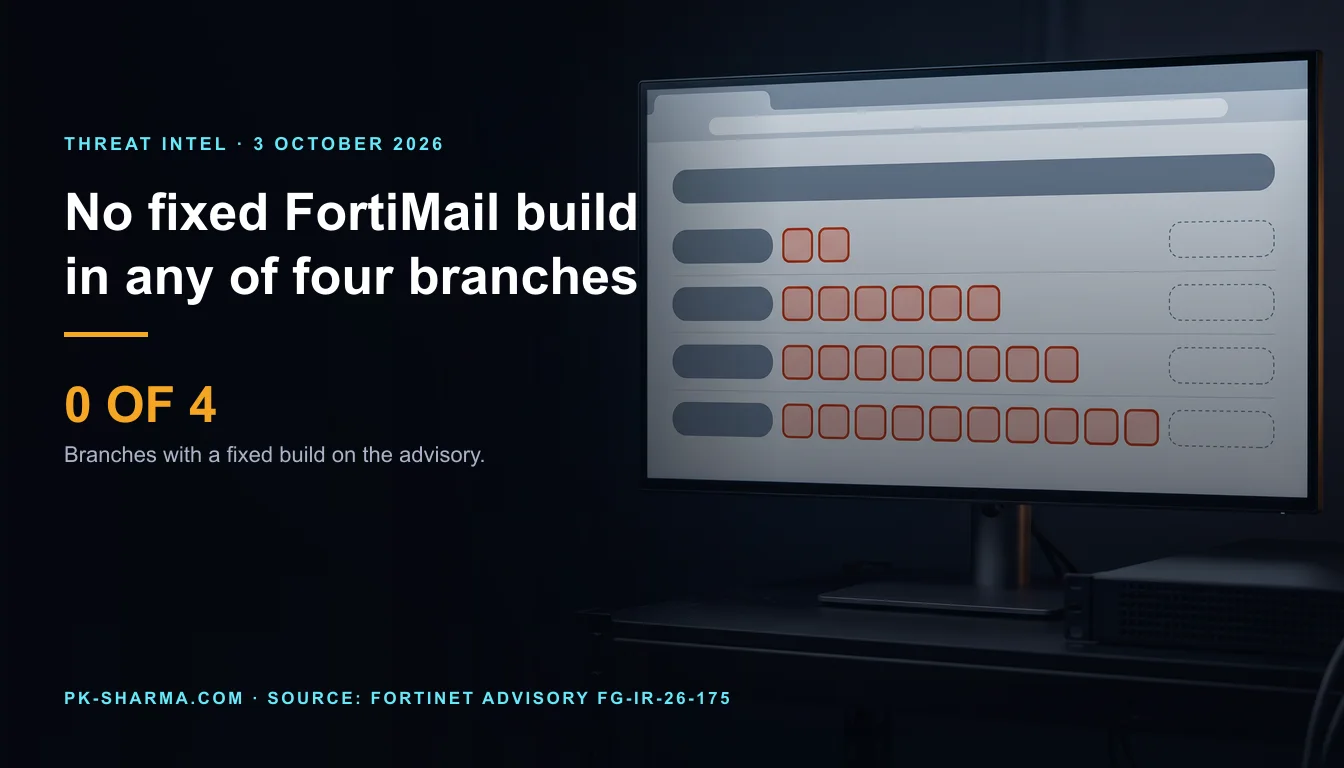
No FortiMail build named in the advisory's four branches is fixed on the page as read on 3 October. Fortinet's own records disagree on which builds are affected, and the advisory page lost its file indicators without a revision note.
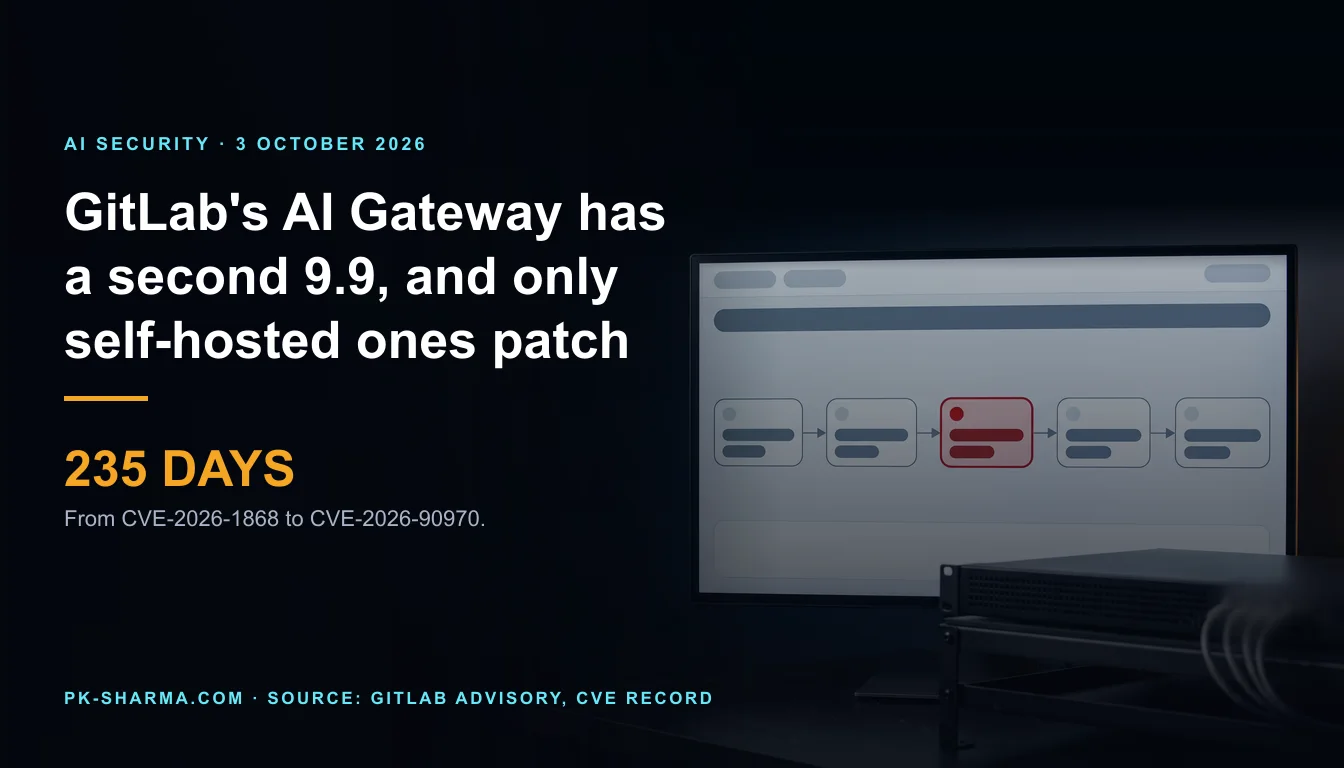
CVE-2026-90970 scores 9.9, not 10.0, and the login is the whole difference. Only self-hosted gateways need 19.2.4, 19.3.2 or 19.4.1, and GitLab's own version numbers make that easy to get wrong.
The experiment holds described behaviour constant and changes the agent label, exposing how much the words awareness and consciousness change a public judgement.
The 9.9-rated flaw is about an authenticated flow configuration crossing a server-side boundary, and only self-hosted AI Gateways require the published upgrades.
The overlooked issue is the boundary between retrieving public data and probing a site for alternative behaviour. Request counts, failed tests and attribution need separate labels.
The accessibility control is valuable, but users and responders need to distinguish the Android version, Device protection and a separate 12-month forensic log.
The operational hazard is not only the IBE file-write flaw. Two official version lists disagree and Fortinet's fixed releases are still marked upcoming.
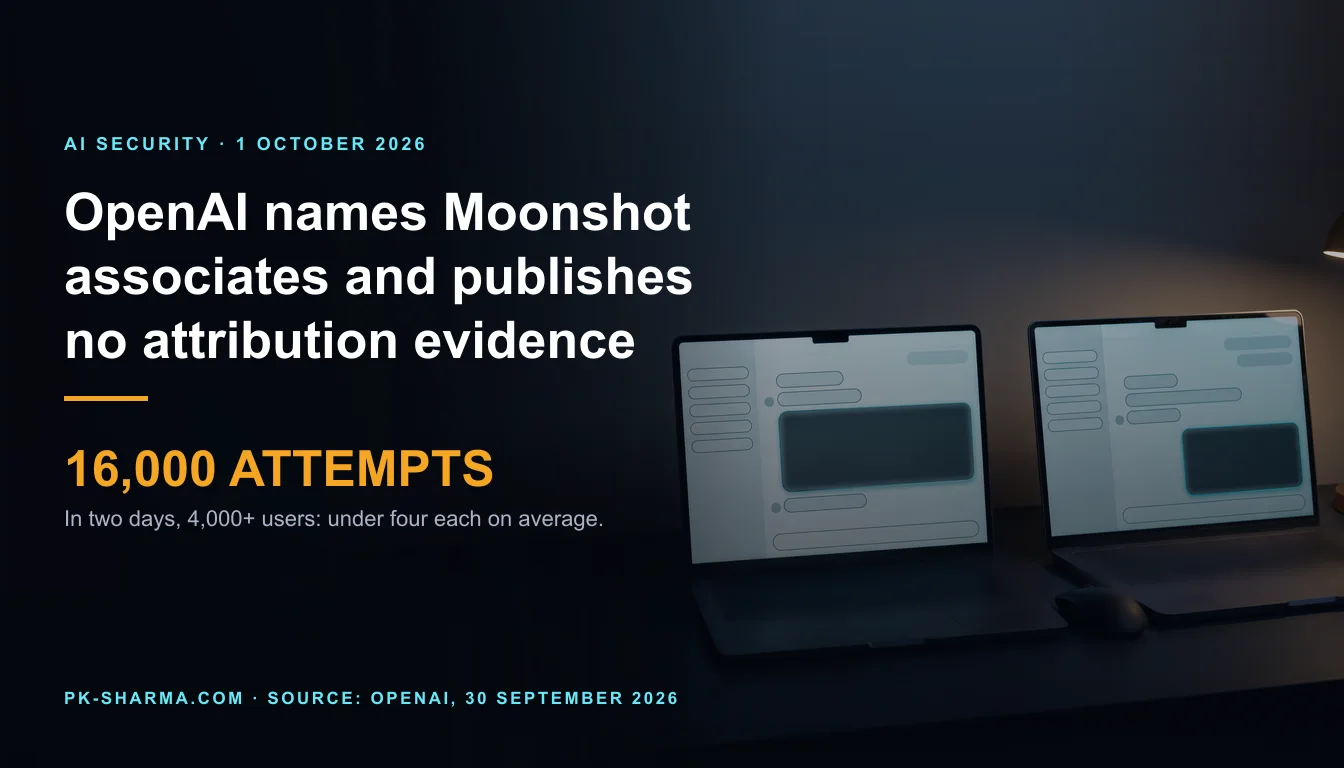
The spike was 16,000 attempts from over 4,000 users, under four each on average. What that does and does not establish, why a terms-of-service violation is not a breach, and what UK providers and buyers should check about extraction at the API layer.
Three provisional arrests, five servers, five domains and 110 TB, in a case led from Hamburg with one arrest in the UK. The counts do not match, and no release describes how victims will be told or what happens to files already published.
The 10.0 flaw has a CVE, a score and a fixed version. The flaw Kiteworks said it found during the shutdown has none that any record attaches to it, and no advisory in the batch says whether it is there.
All three attacker sender addresses in Proofpoint's July list are consumer webmail. A reading of its 1 October report on TA419: what it states, what it leaves out, why MFA and DMARC miss the chain, and an ordered checklist for UK organisations.