What Zenity's five posts, AWS's AgentCore pages and Dark Reading's report establish about AgentCorruption: dates, scope, what AWS states, what UK customers must still check on agent roles, and a ranked checklist.
What the 8 October seizure papers, the 58-page joint advisory and the NCSC's own item establish: two alleged breaches, six scan targets not said to be breached, 20 universities or six, and a UK checklist.
OpenAI's 7 October teen post gives no group size, period or method for its figures, and its social media comparison sets a survey against logs. What UK schools, parents and providers can check under Ofcom, ICO and DfE rules.
Of 83 CVEs in Splunk's five 7 October advisories, three Splunk Enterprise flaws score 9.0 or more. One is explained. Two are a weakness class and a score, and the October affected ranges end at August's fix builds.
What CrowdStrike's 7 October post establishes and what it leaves out: AI tooling from the actor's files, no named bank, no victim count, no Anthropic model named, a stack 3 to 63 days old, and a UK checklist.
Bitdefender's Midnight Mimosa report: malware preinstalled in cheap Android firmware, not removable by the owner. The UK is in a chart at 3.49% with no count behind it. The actor, the point of insertion and any reset test are not given; 13 Play apps were still listed.
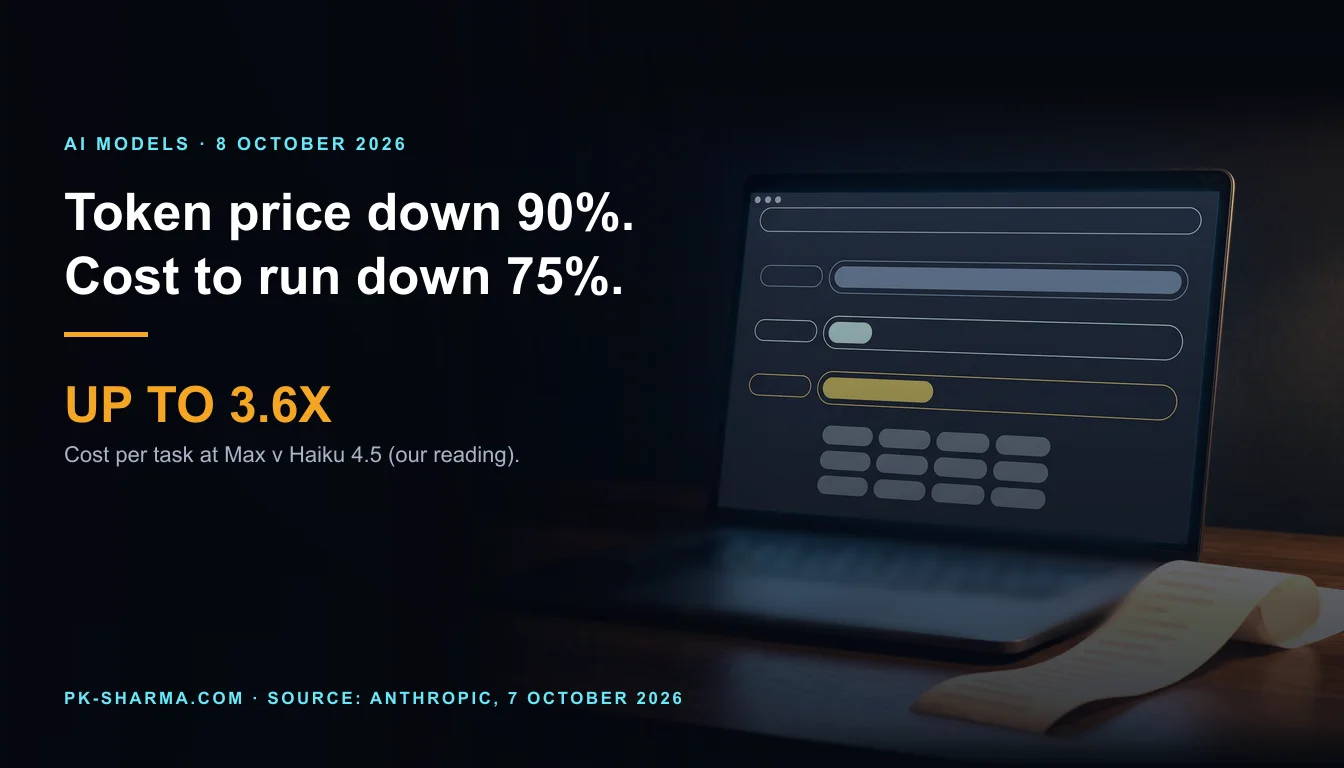
Footnote 2 explains why 90 per cent off a token is 'around 75 per cent' off the bill. Anthropic's chart data put the 75 per cent at Medium effort and show Max costing 2.3 to 3.6 times Haiku 4.5 per task on three of four benchmarks.
One name, two versions, 15 days apart: what OpenAI's card, help pages and API docs establish about GPT-6 Sol in ChatGPT chat, what they leave out, and a UK checklist for model change control.
What Talos's 8 October post on UAT-11985 establishes and what it leaves out: three emails behind the AI-assisted label, a relay that forwards typed codes and taps, no victim count, and what UK organisations on Google can do.
What the 6 October Lightwell release states and leaves out, what a search of NVD, CVE.org, GitHub and osv.dev found, how backports confuse scanners, and what Cyber Essentials and the NCSC mean for a UK Java estate.
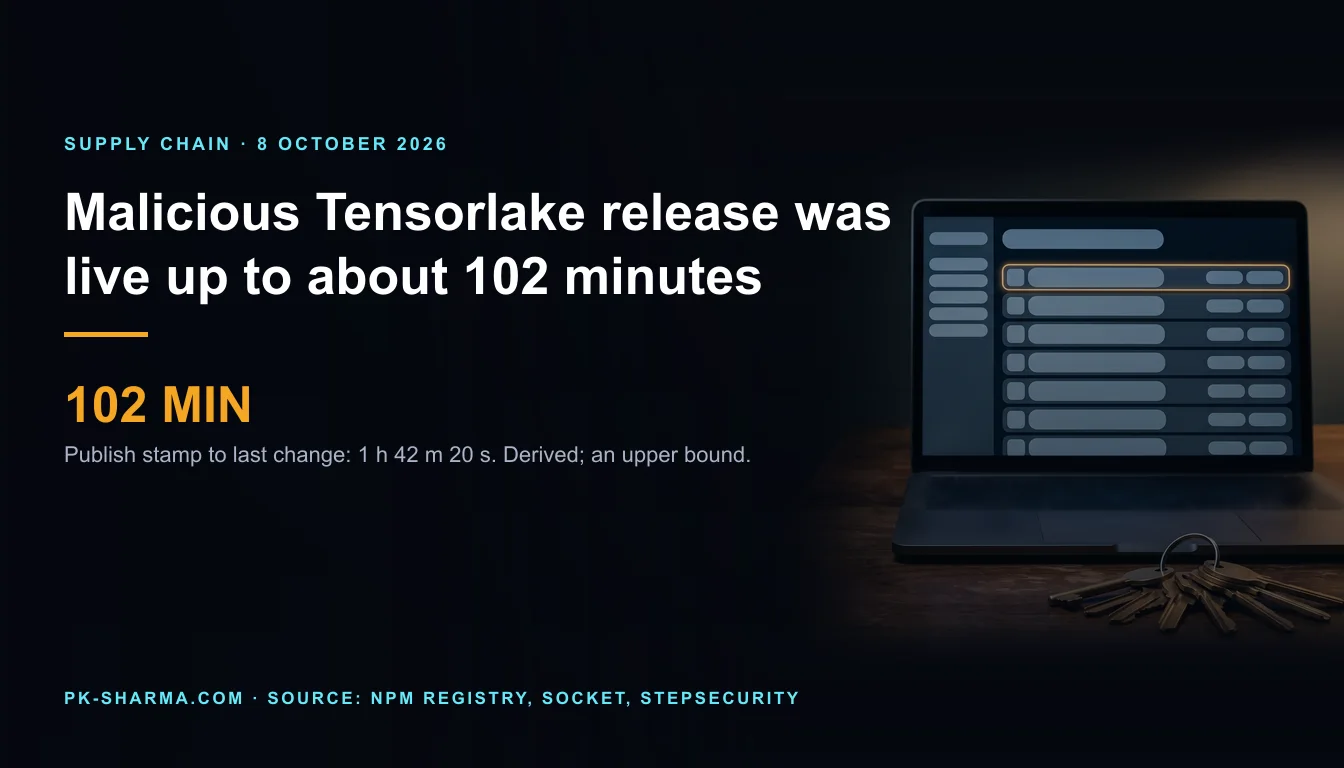
A Shai-Hulud worm release of the tensorlake package sat on npm for no more than about 102 minutes, about 91 of them after Socket flagged it. It carried valid provenance and a trusted publisher. No source reports a victim count, and six native packages at the same version remain.
Monitoring is not unlawful in itself, and a score is not a decision. The Guardian's account leaves open whether callers were told, whether an impact assessment came first, and what managers do with a fail score.