A confirmed share of at most 5 per cent, four comforting labels and one command the person ran themselves: what Huntress's 28 September report establishes about custom GPTs used as ClickFix lures, and what it leaves open.
What OpenAI's report shows, what it leaves out (a rate, a second infected agent, any test of dots), what AgentWorm, Morris II, Mind Viruses and a Copilot for Word case measured, and which controls break the loop.
Sol reaches 68% of Astra's recent-exploit rate at a fifth of the list price. What the dots appendix measured, why UK Pro users are excluded, what the tiers cost in pounds, and 49 days between Grok Bot and dots.
The headline says groups. The analysis shows a follow of a channel, run inside the paired session, and OSV recorded the behaviour on 26 May. Today the npm registry still serves 85 of the 101 names, and four of the five most downloaded have no public malware record.
The record as of 29 September: an intruder that decided each step at machine speed, explained itself in code comments and fought its own tools. The flaw, the attacker, the model and the data outcome are all unstated.
Ofcom's case CW/01358/09/26 examines Aylo's due diligence and testing, not Apple's system. A reading of Ofcom's case page, guidance and the Act on what an investigation is, what highly effective means, and what to ask of any third-party age check.
Google's AI scanning offer to critical infrastructure is run by Wiz. Five terms clauses grant permission and disclaim liability; the limits, human review and stopping points sit on a policy page the terms never mention.
One former security officer's account of a firewall rule that linked a shared VPN to a classified immigration records server. It is a path, not a breach, and it is more than a decade old.
A redirect changes where a name points, and the public record shows the registration layer stayed still. What is missing is the layer that moved, the real length of the window, and anything beyond Elsevier's own "no indication".
Bitget's account moved from a compromised backend system to a flaw in an unnamed third-party security product. The two are layers of one chain, not rivals, but the wording around them keeps shifting and the report that would test it is late.
The record moved in a day: a 40 word police post became a full statement with two suspicions, a custody ruling and a statement that the man was not arrested over Odido. The FBI claim is still a claim, and nothing official links the two.
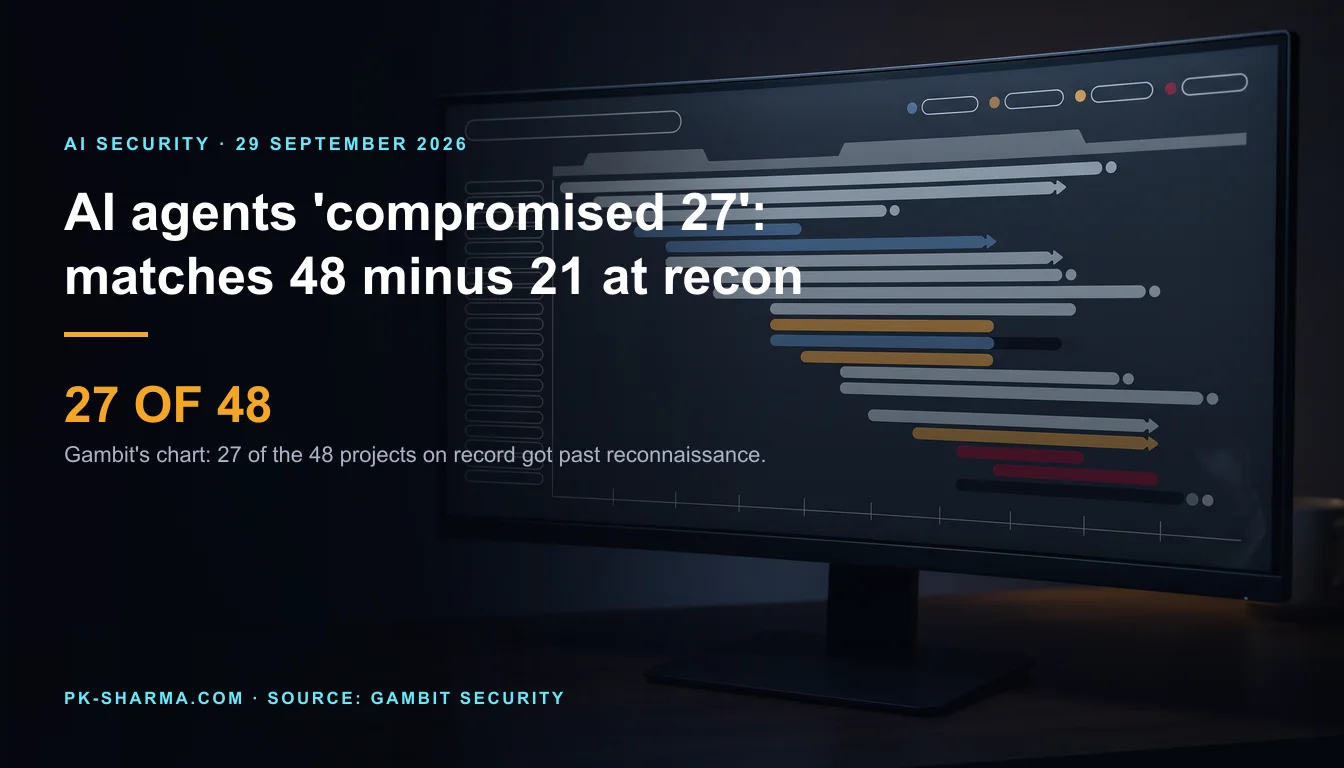
The headline says three open source AI agents broke into 27 organisations. The recovered chart says 21 of 48 projects never left reconnaissance, 8 more got lesser access, and the one documented chain needed no CVE and no new class of control.