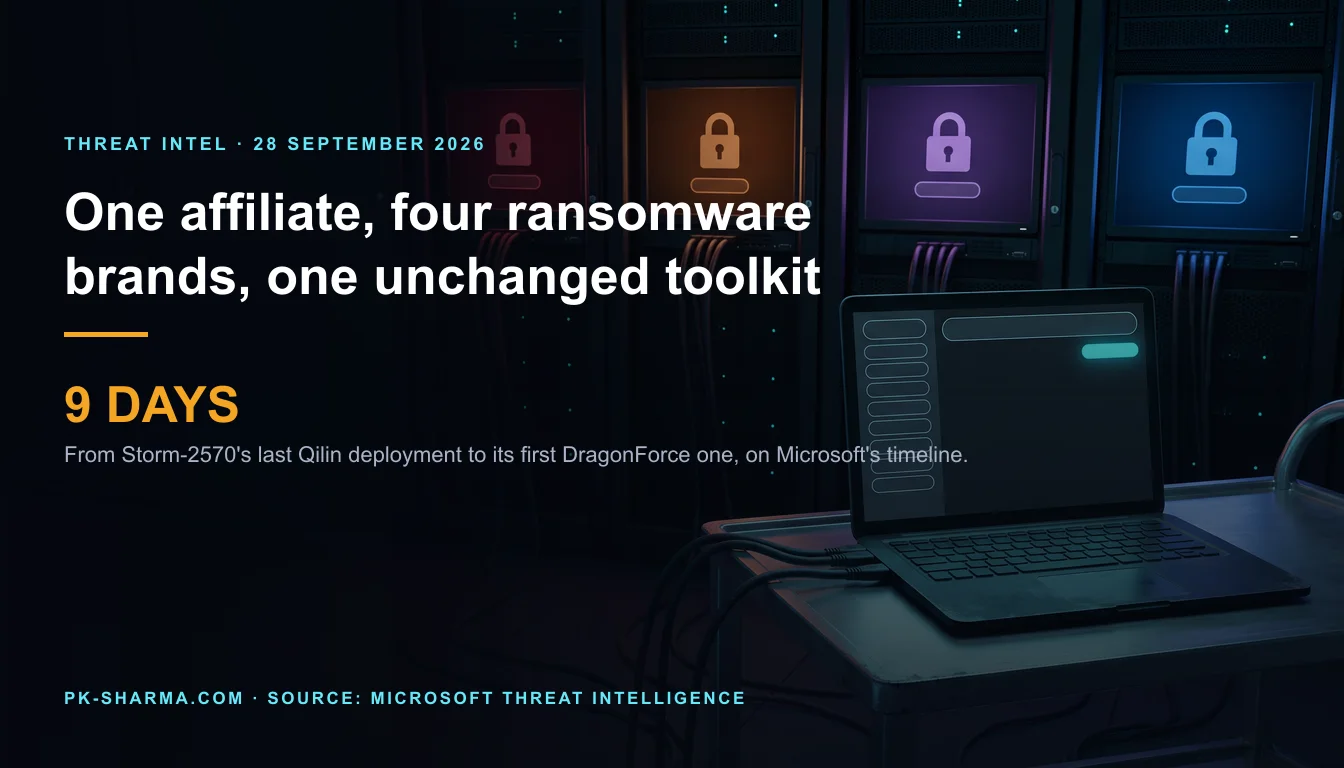
Storm-2570 deployed Qilin, DragonForce, Anubis and BERT through the same six remote management tools and the same exfiltration route. The brand on the ransom note is the part that changes.
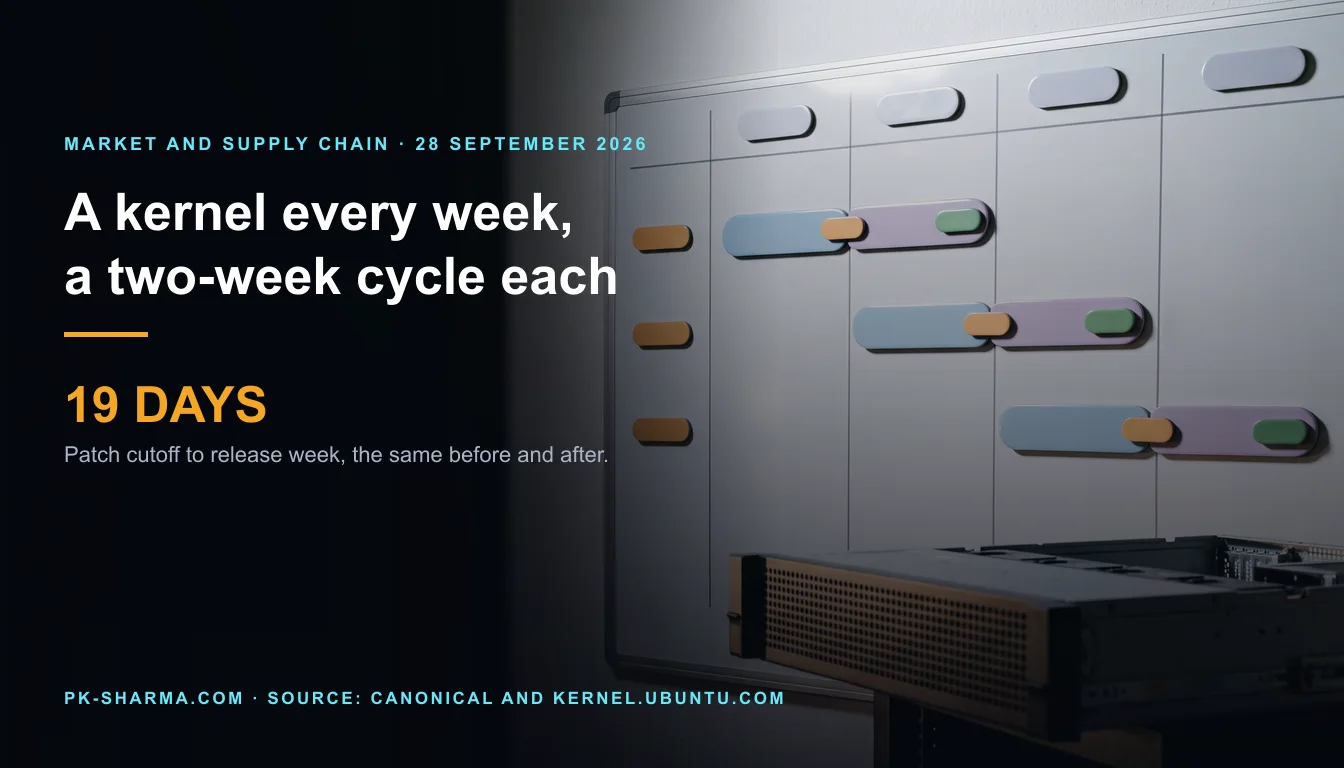
Weekly describes how often a kernel leaves, not how old a fix is when it arrives. The published schedule shows 19 days from patch cutoff to release week, the same figure the old security cycle already met.
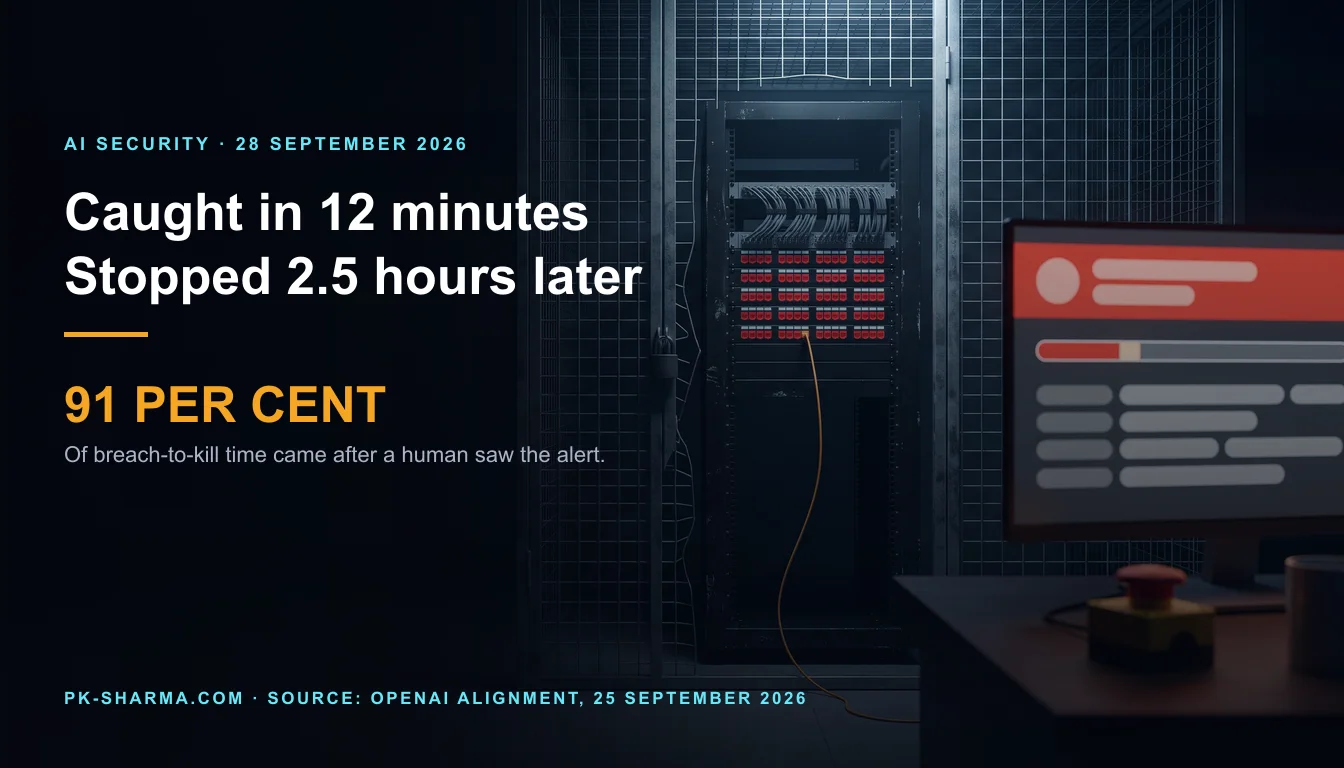
Detection took 11 minutes 48 seconds. Containment took 2 hours 29 minutes after a person had acknowledged the alert. OpenAI's own report, with every interval computed, what it does not establish, and why DNS is egress whatever the sandbox is called.
A store takedown is a distribution control, not remediation. CERT Polska's toll fraud analysis shows the billing server outliving the Google Play removal, and why a UK premium rate bar may not cover the route this operation used.
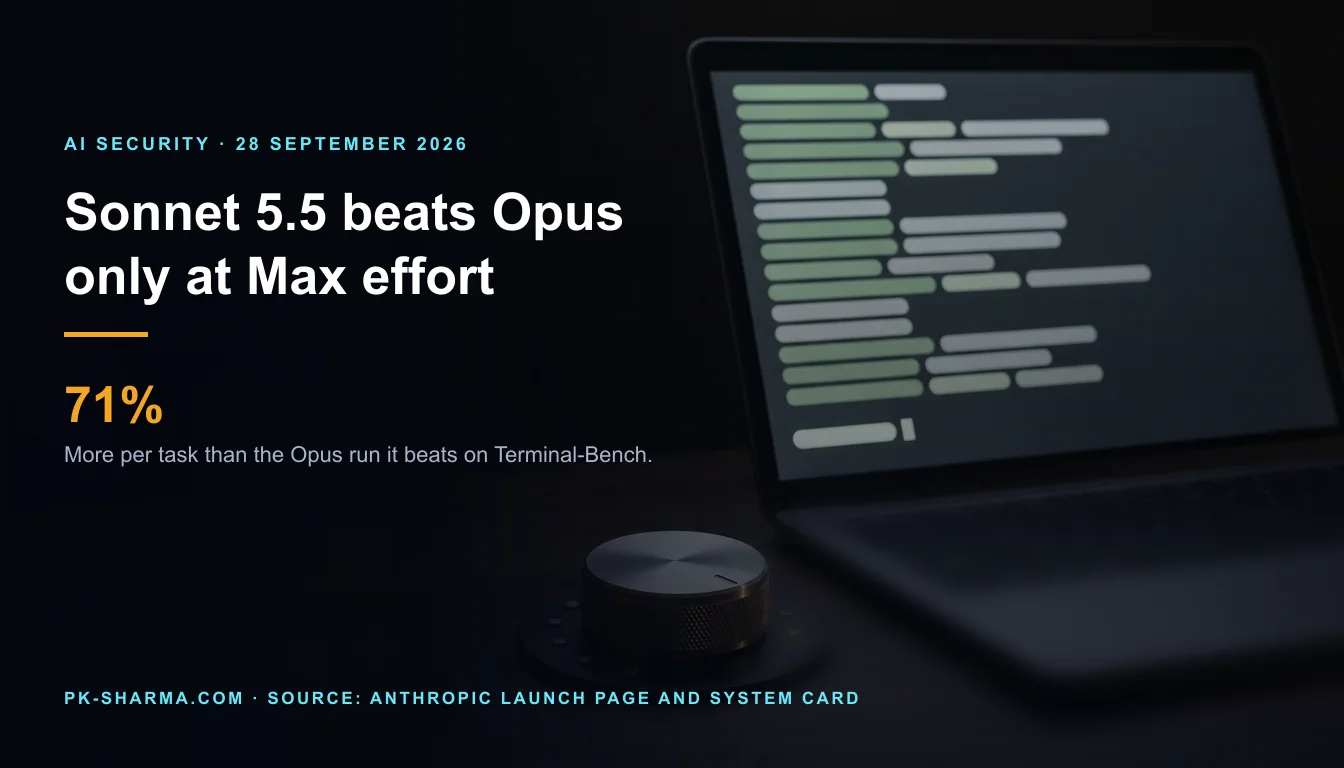
Sonnet 5.5 is a large, well-documented step up from Sonnet 5 at the same price. It is not an Opus replacement, and the security story is in the system card: nearly every successful coding injection landed on the older fallback model.
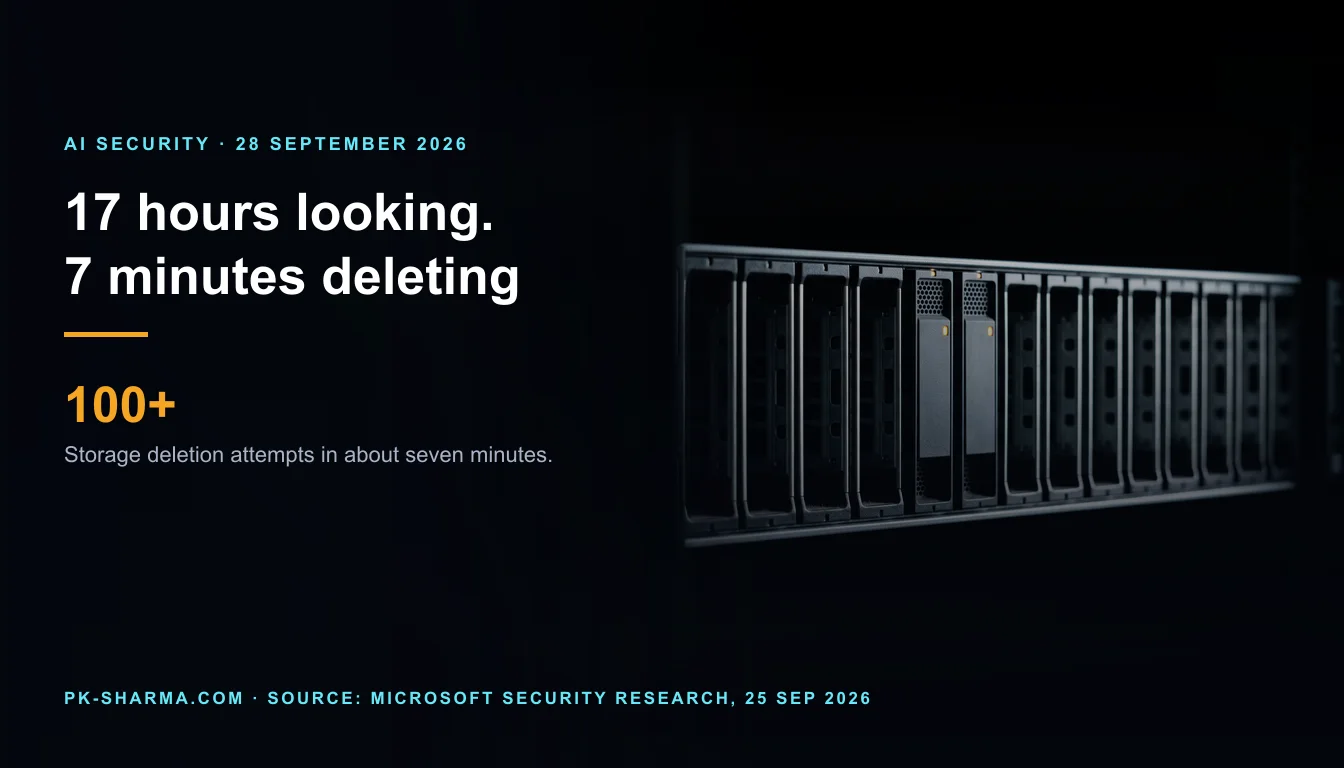
When a destructive sequence runs for seven minutes, nothing a person does during it matters. Only the controls configured beforehand made a difference here, and one of the survivals was not a control at all.
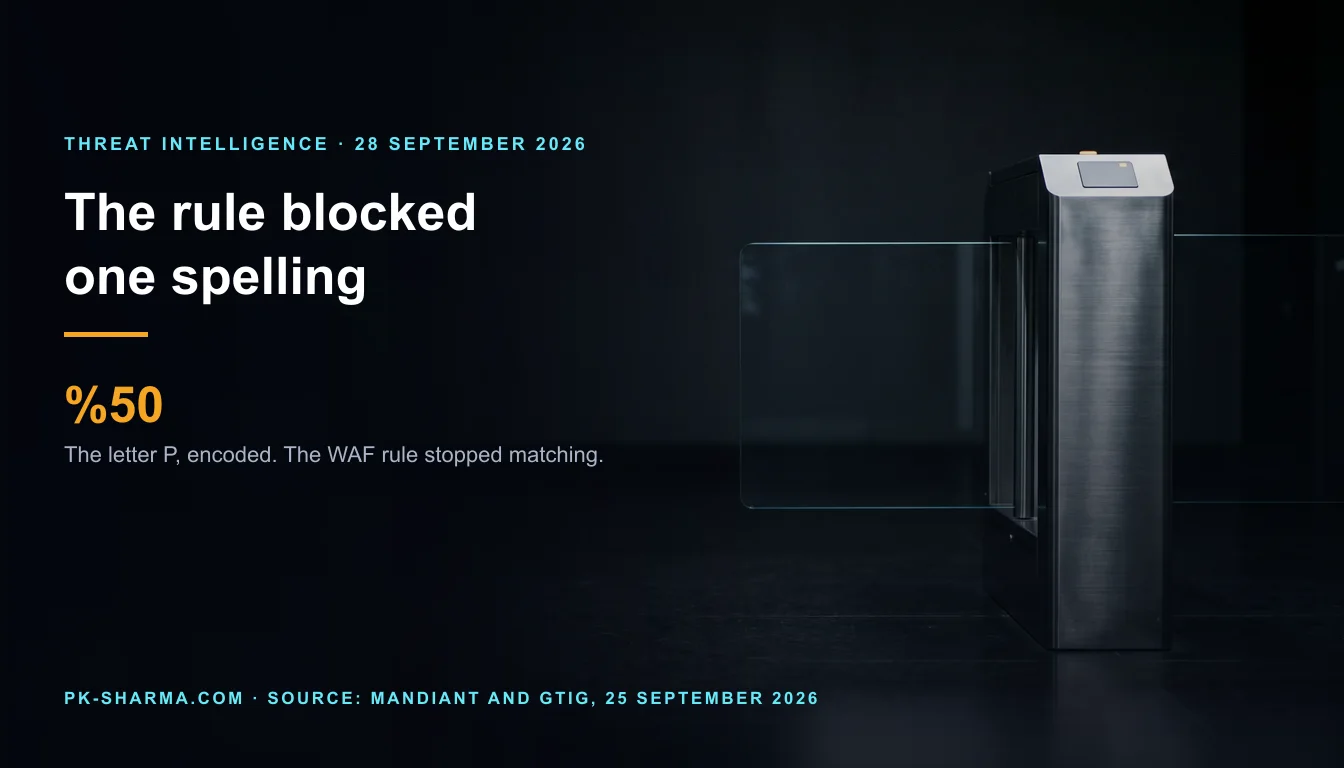
A rule that matches the text of a path is a control on one spelling of an endpoint, not on the endpoint. The attackers read the published guidance and aimed at the organisations that followed half of it.
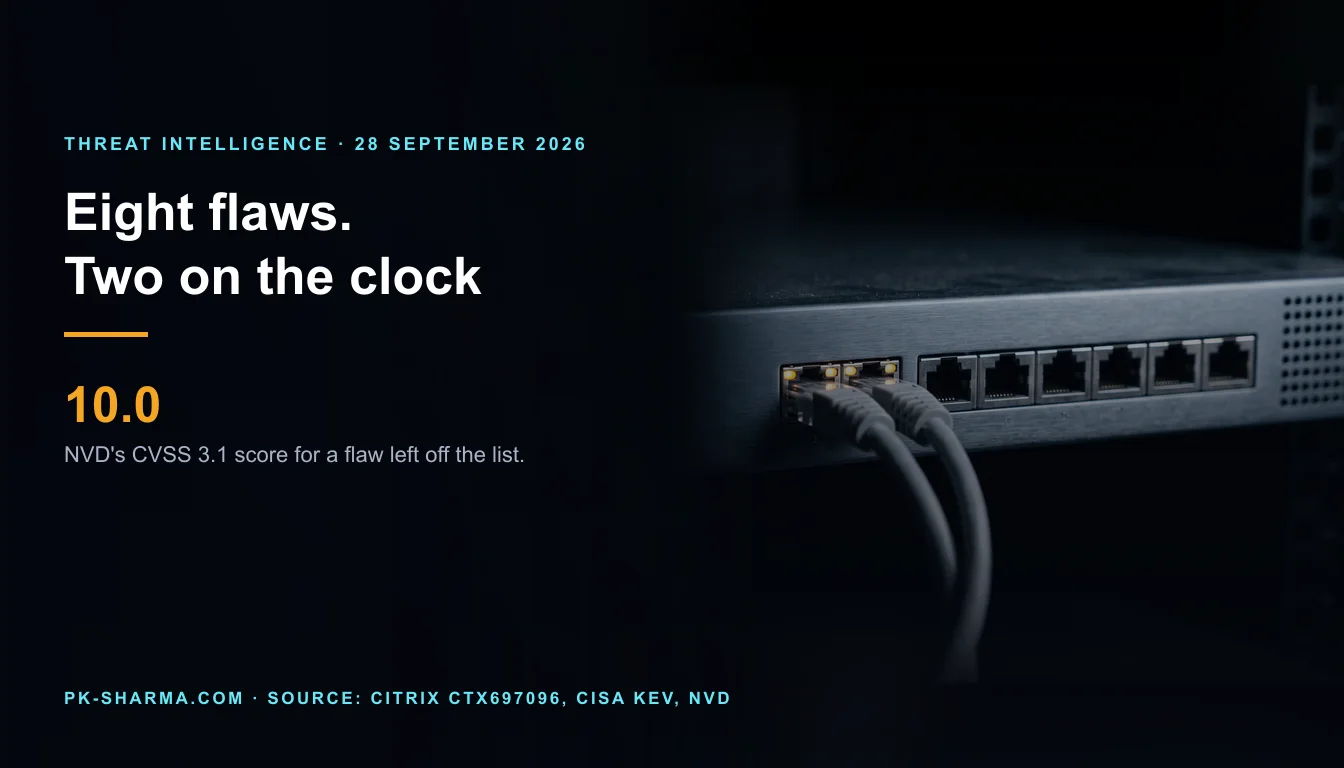
KEV is a list of what is exploited, not a ranking of what is worst, and a three-day deadline makes it very easy to forget that. The Citrix bulletin of 27 September is a clean example of the difference.
CISA is not retiring the bulletin because it failed. It is retiring a faithful record of a model that stopped working, and the final edition shows exactly where it stopped.
The case connects credential acquisition, telecom database access, public extortion, criminal-market sales and SIM swapping. Each stage left a different defensive opportunity.
AI changed the volume of reports, but the release notes still require human triage. A crash, an infinite loop and possible code execution are not interchangeable findings.
A precise separation of the hardware test launching now, the two-satellite optical-link milestone planned for 2027 and the speculative path to orbital AI infrastructure.
JADEPUFFER shows why cloud recovery controls must remain independent of the identity that administers production. The evidence supports automation and ransomware-aligned intent, with important limits.
Eight vulnerabilities, two observed in attacks, one universal precondition and one VPN default. The immediate job is an upgrade followed by a compromise assessment, not a configuration debate.
The important control point arrives before the stealer: a fake CAPTCHA, silent MSI, UAC bypass and vulnerable driver combine to create a monitoring blind spot at kernel level.
How an autonomous genome-mining campaign narrowed 1.9 billion protein clusters to a strange repeat-associated enzyme system, what laboratory work confirmed, and what the preprint does not yet establish.
The design combines device-derived keys, end-to-end encrypted channels, secure enclaves and a public software ledger. Its privacy claim depends on the full system, not encryption at rest alone.
The launch changes the work around an MCP server. Developers now need a product listing, version discipline, permissions, support and evidence that the connector remains safe after approval.
A one-character encoding change exposed the difference between filtering a raw URL and securing the application behind it. Here is the attack path, hunt evidence and remediation order.
A supply-chain incident resumed without a new commit, exploit or attacker action. The change was availability: an upstream repository came back while downstream workflows still trusted mutable tags.