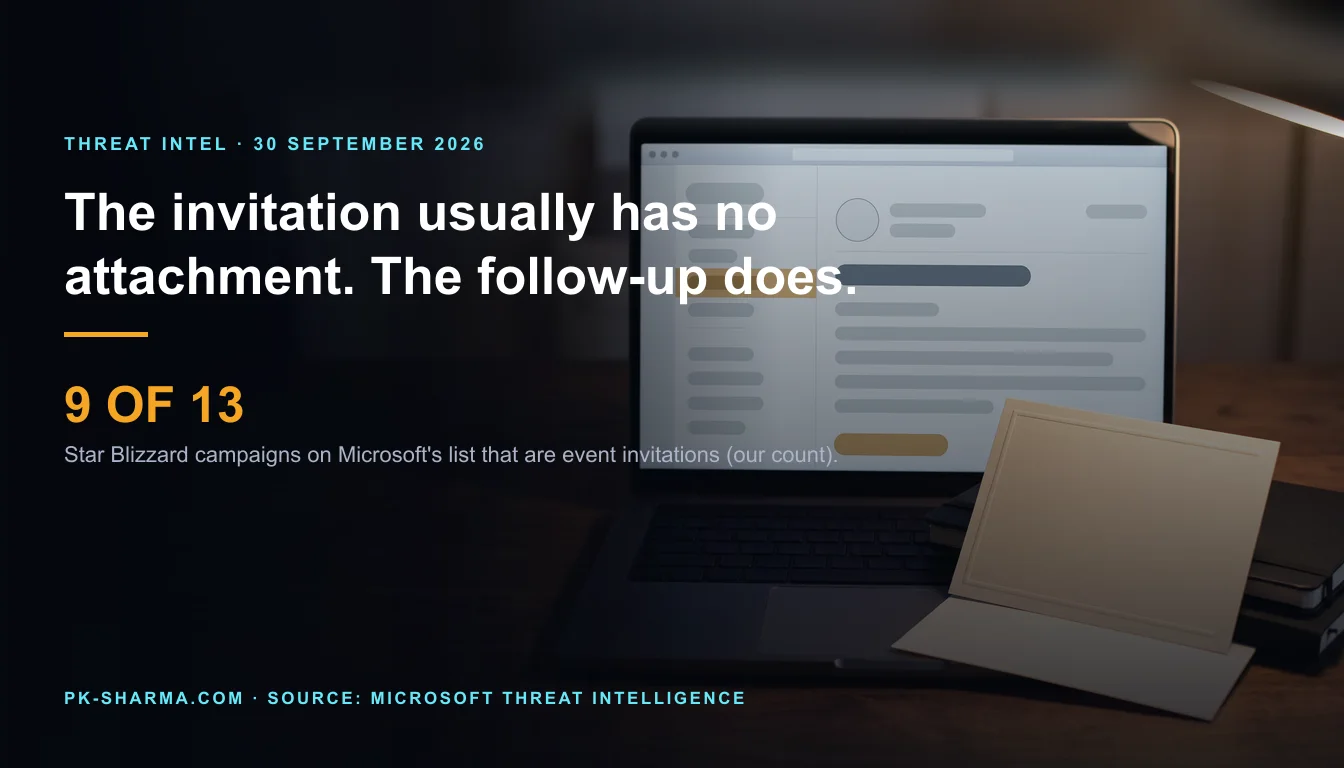
A count of Microsoft's own timeline, an invitation with nothing to scan, and six labels that reassure without controlling anything: what the RedFlick report establishes about Star Blizzard, and what it leaves open.
VUSec and Sant'Anna's Branch Target Reuse attack read a root hash at 8 bytes per second on two Intel chips. Stale predictor entries were reusable on AMD and Arm too, but nothing leaked there. The kernel fix dates from July.
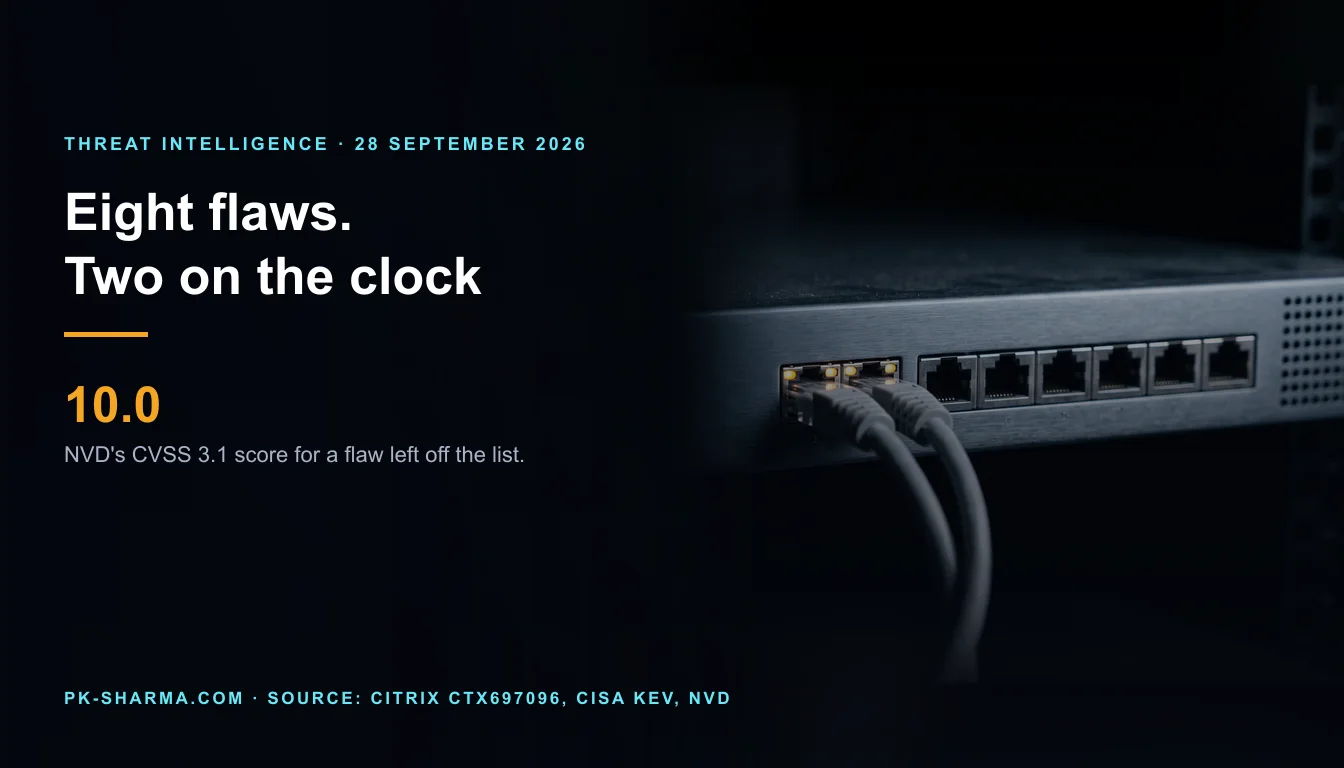
Mandiant, eSentire and GreyNoise now date NetScaler exploitation to before the 27 September bulletin. What Mandiant observed and what it did not, how the exploited pair compares with briefing 143, and what to hunt and harden.
A DTLS retransmission bug can send OpenSSL heap memory to the other side or crash the process. Fixes are public for four branches, premium-only for three and absent for 3.1 to 3.3. No exploitation is reported and no leak size is stated.
A confirmed share of at most 5 per cent, four comforting labels and one command the person ran themselves: what Huntress's 28 September report establishes about custom GPTs used as ClickFix lures, and what it leaves open.
Apple's exploitation notice for CVE-2026-86950 is one 29-word sentence about iOS, repeated on both macOS advisories. Older iOS and macOS lines have no listed fix, and Lockdown Mode cannot be set by MDM.
Microsoft's earliest dated NeedyMantis sample was first seen on 3 October 2025, 187 days before DAEMON Tools installers were trojanised. The malware hard-codes a Firefox 21 user agent, a browser released in May 2013.
Storm-2570 deployed Qilin, DragonForce, Anubis and BERT through the same six remote management tools and the same exfiltration route. The brand on the ransom note is the part that changes.
A store takedown is a distribution control, not remediation. CERT Polska's toll fraud analysis shows the billing server outliving the Google Play removal, and why a UK premium rate bar may not cover the route this operation used.
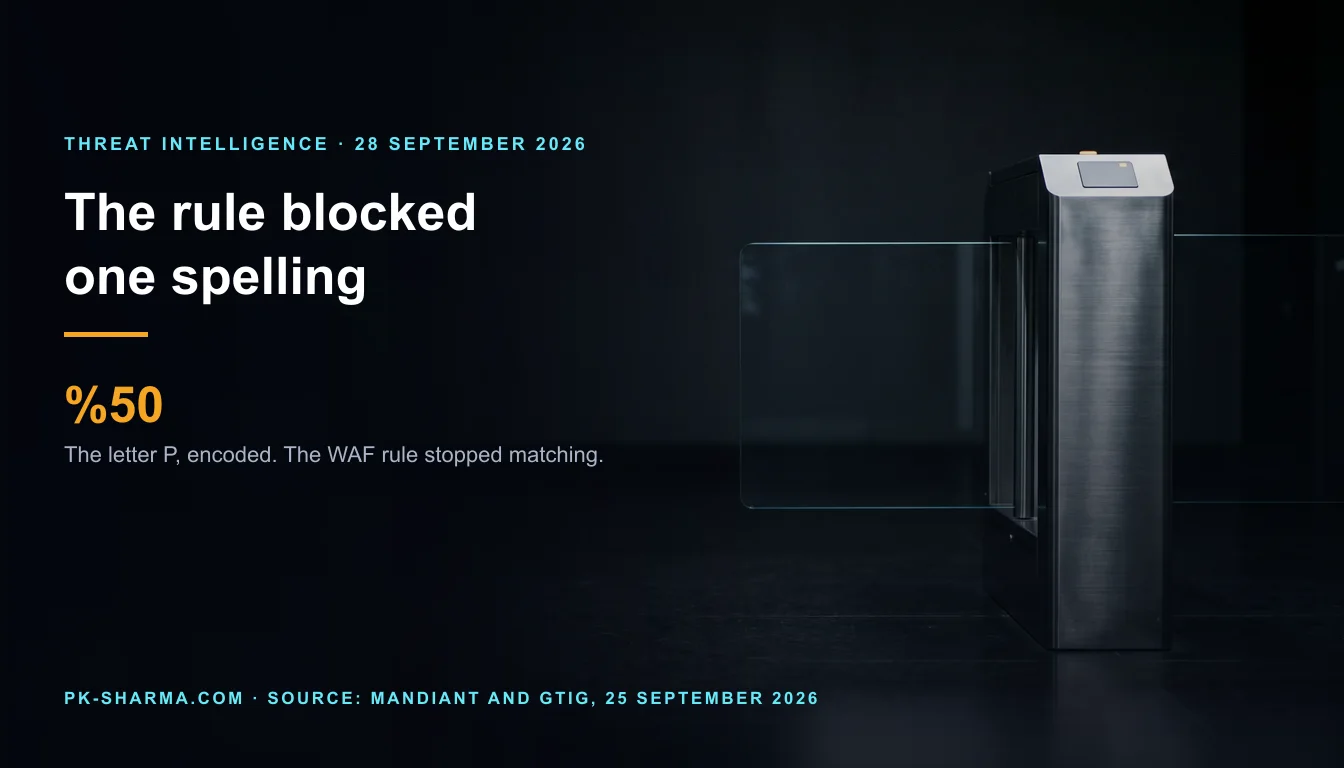
A rule that matches the text of a path is a control on one spelling of an endpoint, not on the endpoint. The attackers read the published guidance and aimed at the organisations that followed half of it.
KEV is a list of what is exploited, not a ranking of what is worst, and a three-day deadline makes it very easy to forget that. The Citrix bulletin of 27 September is a clean example of the difference.
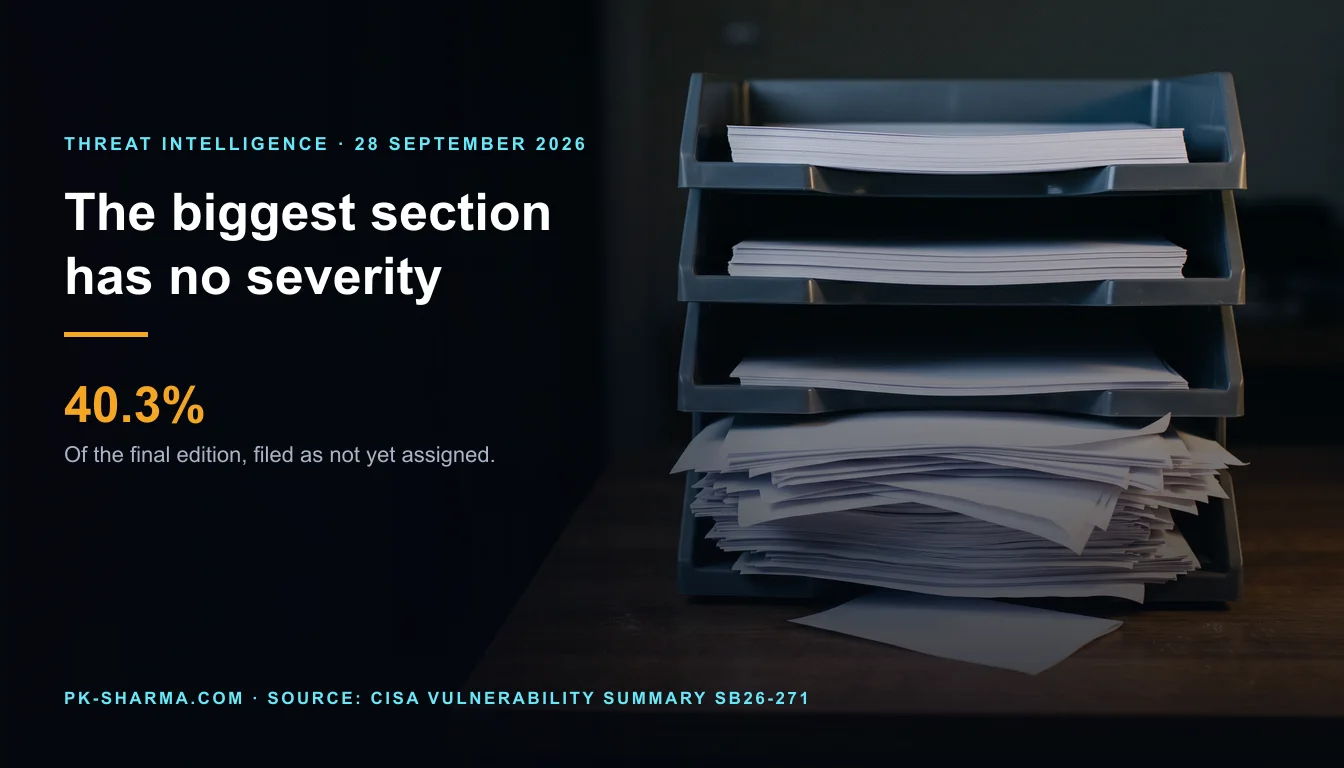
CISA is not retiring the bulletin because it failed. It is retiring a faithful record of a model that stopped working, and the final edition shows exactly where it stopped.