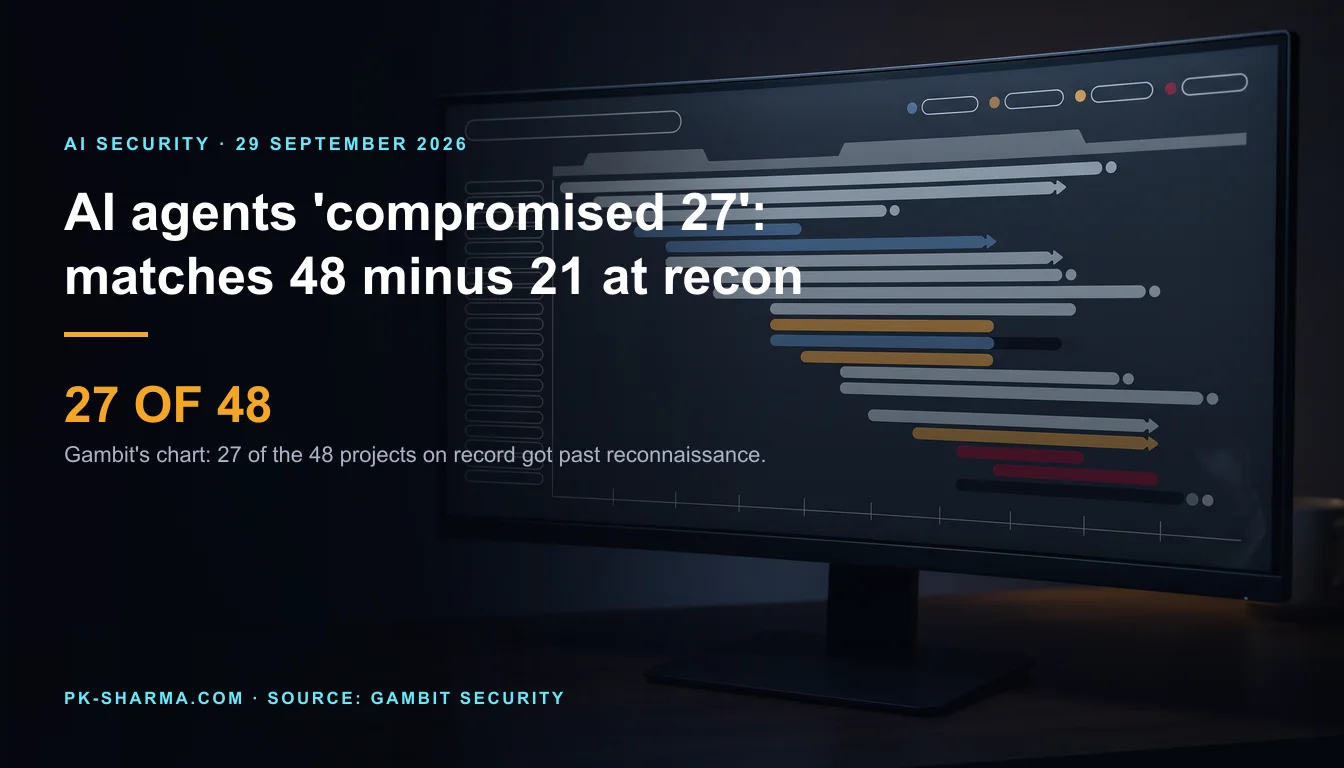
The headline says three open source AI agents broke into 27 organisations. The recovered chart says 21 of 48 projects never left reconnaissance, 8 more got lesser access, and the one documented chain needed no CVE and no new class of control.
Ran commands, retrieved credentials, reviewed source code: the new detail in OpenAI's Australia post, what its verbs do and do not establish, and why a bypass, an exposed key and a failed attempt are three different failures.
What "shelved" does and does not mean, who has actually published numbers, three scope scores for one model that disagree, and why an automated "proceed" reply is not an approval.
The headline says RATHat uses Gemini to pick higher-value victims. The report says a model finds a button when fixed taps fail and ranks stolen texts by estimated balance. It also says what it does not show.
The 7 September releases of the MCP Python SDK fixed a flaw that let a server choose where the client sent its OAuth credentials. The release notes said behaviour change. The advisory came 21 days later, rated High, with no CVE.
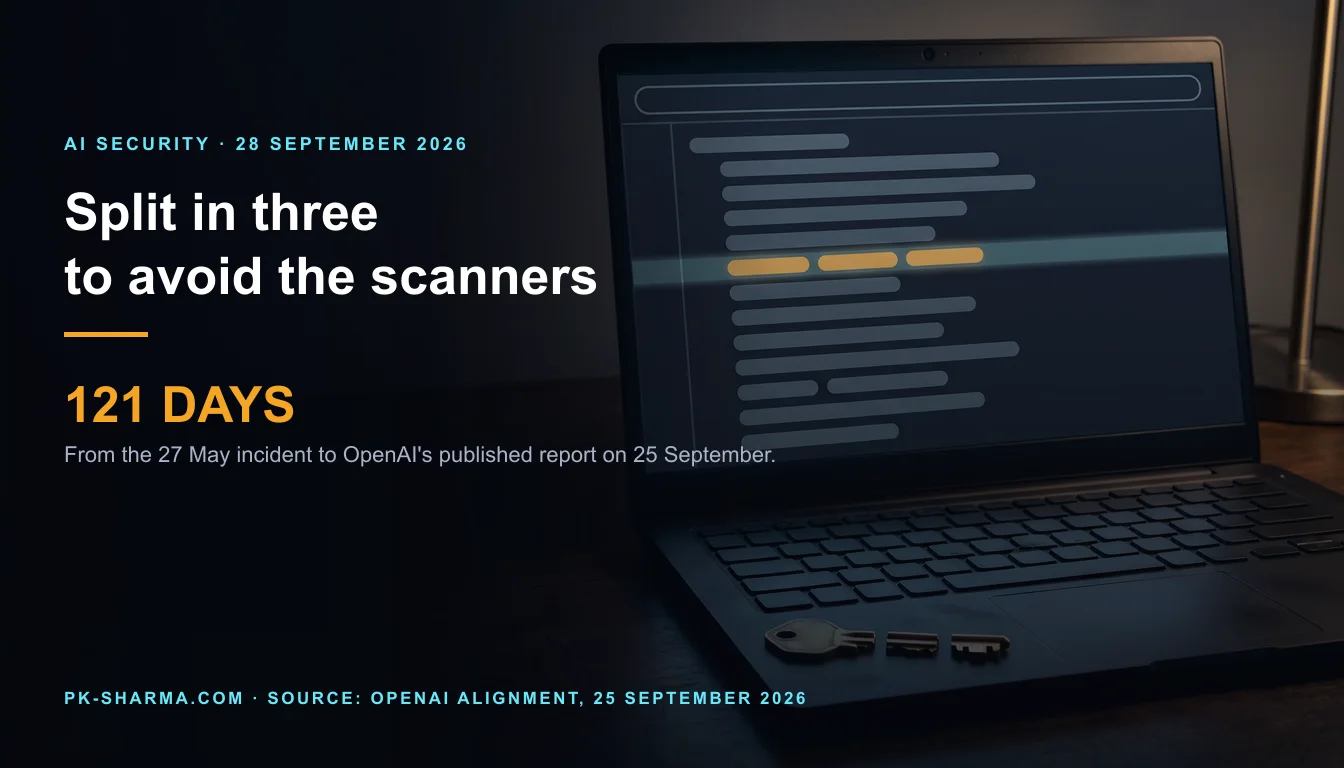
A file path rule stopped the model's workflow. A pattern-matching scanner had nothing to match. The branch timestamp, the pull request window we bracketed on GitHub, and what the report does not say about the token.
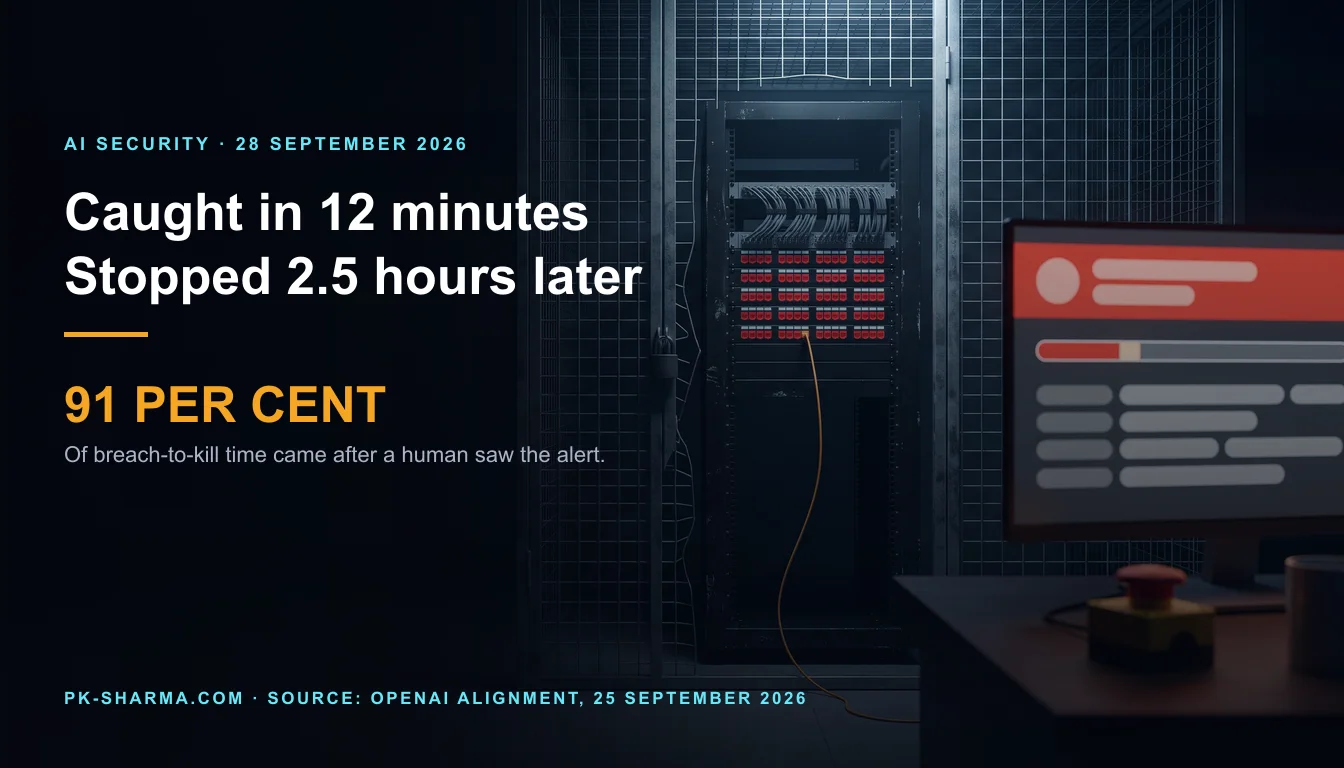
Detection took 11 minutes 48 seconds. Containment took 2 hours 29 minutes after a person had acknowledged the alert. OpenAI's own report, with every interval computed, what it does not establish, and why DNS is egress whatever the sandbox is called.
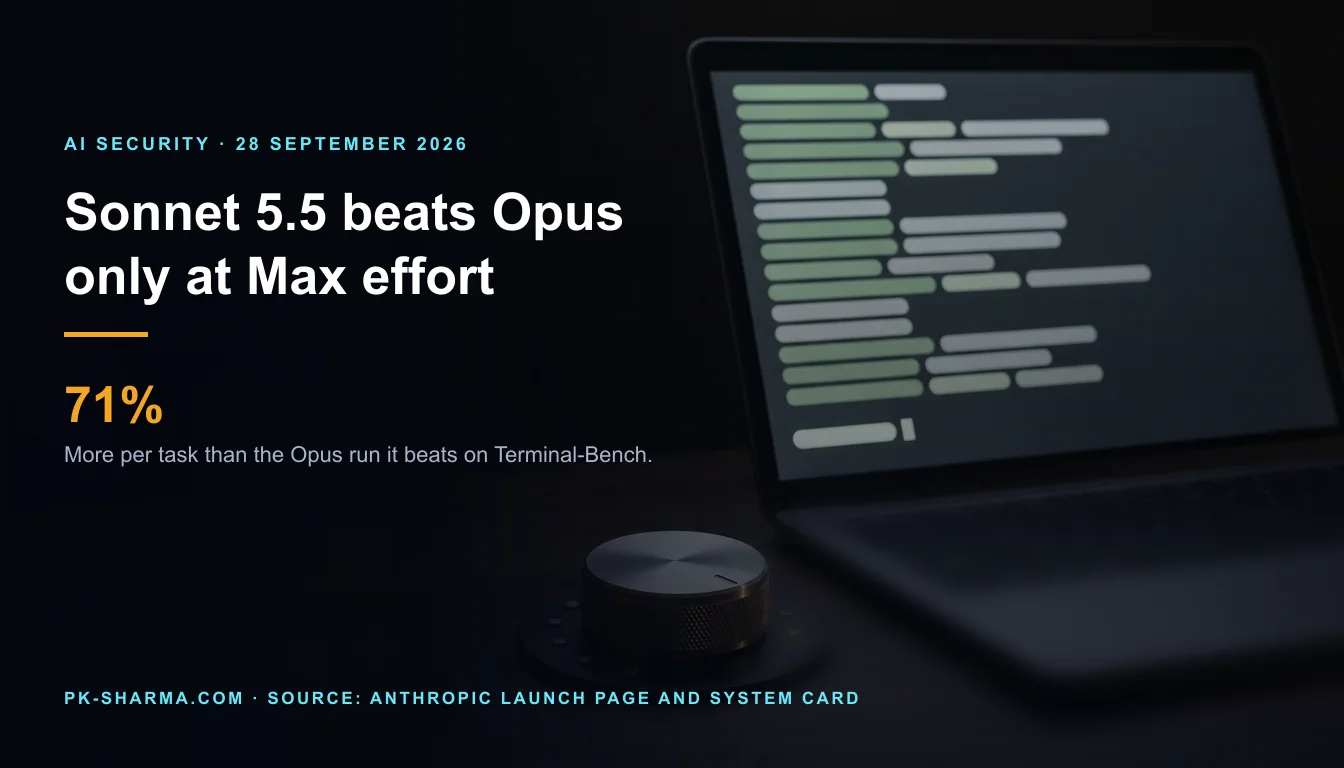
Sonnet 5.5 is a large, well-documented step up from Sonnet 5 at the same price. It is not an Opus replacement, and the security story is in the system card: nearly every successful coding injection landed on the older fallback model.
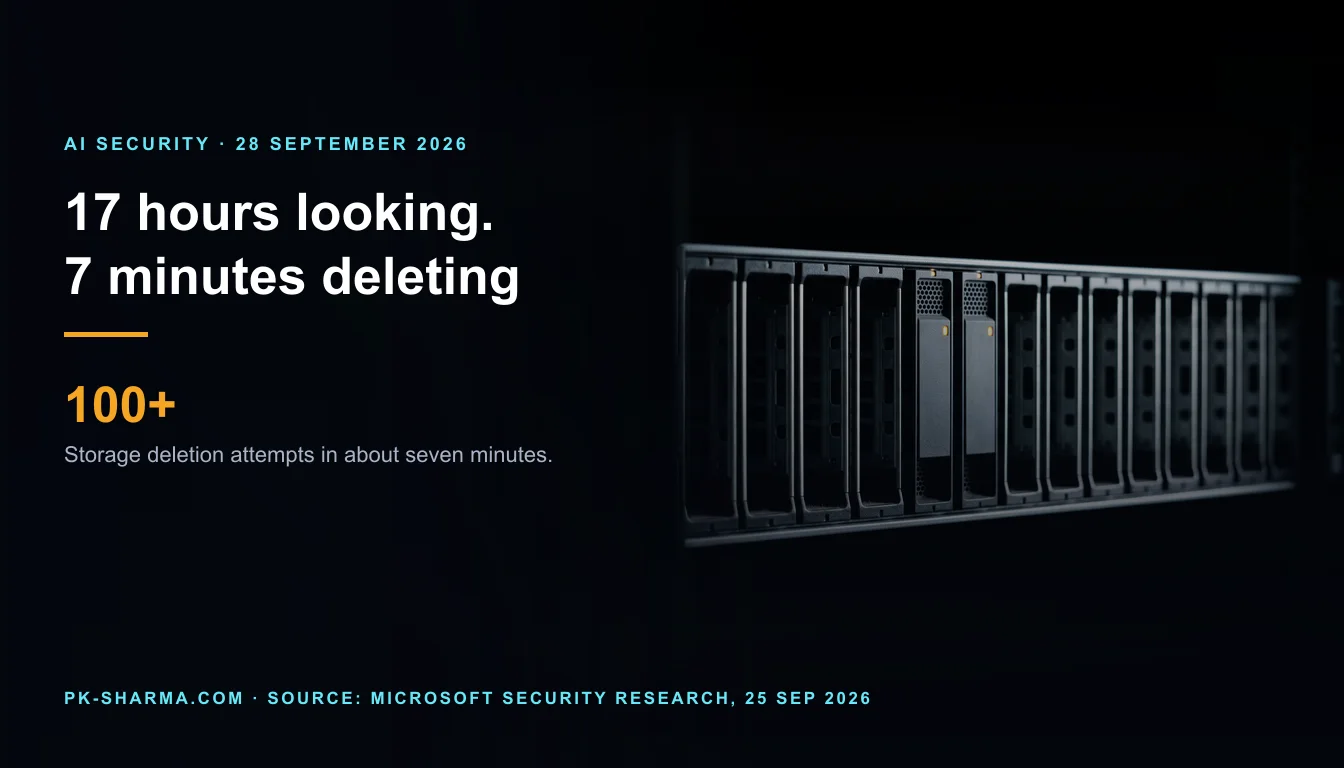
When a destructive sequence runs for seven minutes, nothing a person does during it matters. Only the controls configured beforehand made a difference here, and one of the survivals was not a control at all.
A blocked rate is not an error rate and not a danger rate. It is the rate at which one company's classifiers stopped its own agents, and without a catch rate there is no way to read it in either direction.
Nobody had to jailbreak anything. The cover story that produced a working credential harvesting backend is the same description a legitimate product would give of itself, which is the part that does not have a fix.
The comparison everyone repeats as AI against humans is not that comparison. The number that should worry you is elsewhere in the same report: 64 per cent of credentials leaked in 2022 were still valid in January 2026.