Fake Arch AUR helper hid a root-level install script behind genuine yay source code
A package called yyay copied the legitimate yay source archive but added a malicious install scriptlet. The Arch community reported the uploads on 13 October, and AUR staff removed the uploader’s packages. The confirmed mechanism is a trust-boundary failure at installation; a wider package count and downstream payload remain unverified.
By Parminder Kumar Sharma · · 5 min read
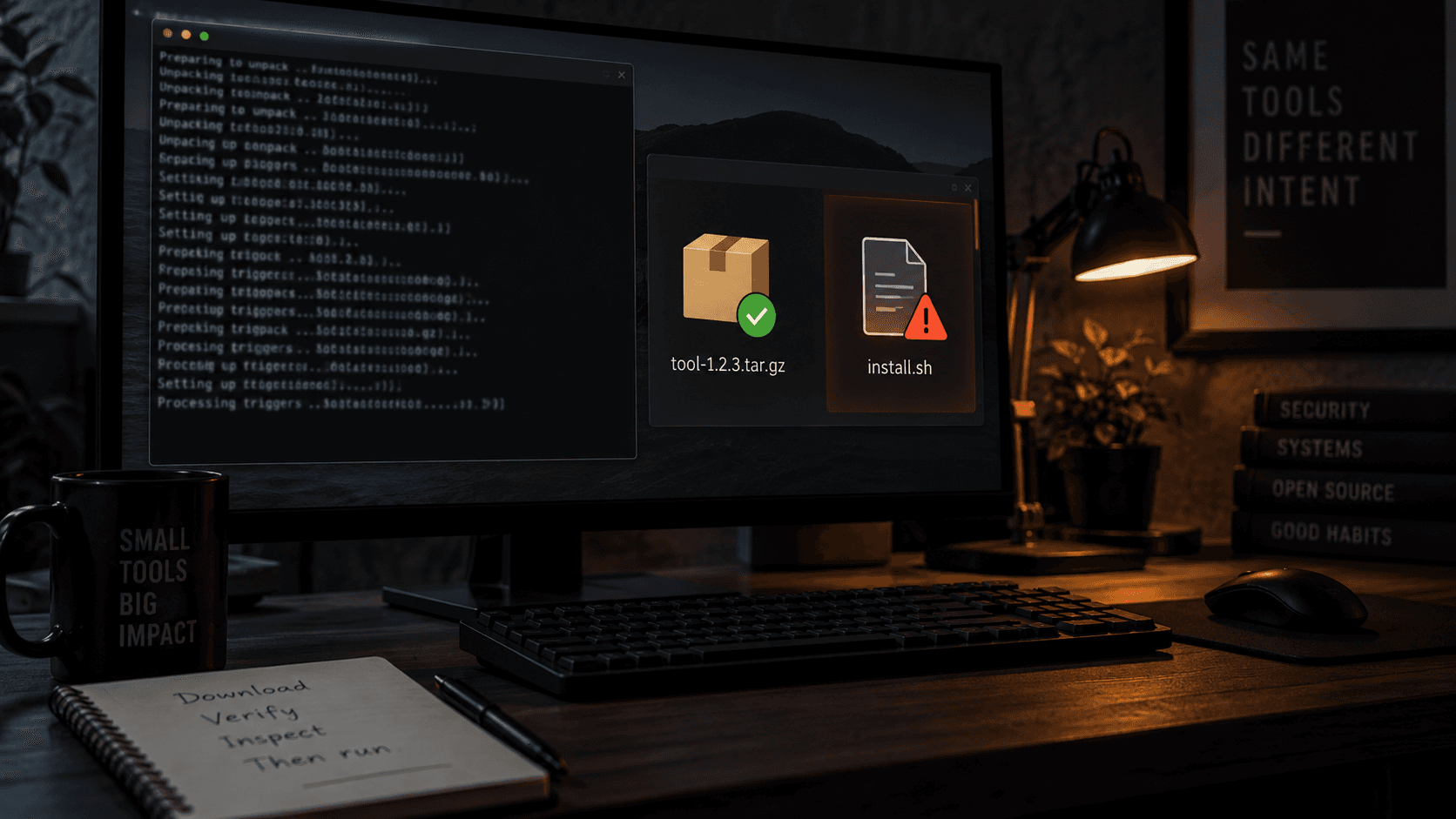
The known case, without an invented package count
An Arch User Repository (AUR) uploader used lookalike names for familiar helper tools in an incident reported on 13 October 2026. The clearest named example in the aur-general discussion is yyay, which impersonated yay. The package pointed at yay’s genuine upstream source archive, and the source checksum passed, but it added a malicious .install scriptlet. AUR staff reportedly banned the uploader account, marchos1as, and removed its packages.
The discussion title refers to ‘hundreds’ of packages, but that is not a verified count of malicious packages or installations. Public reporting also describes a paru lookalike, yet the mailing-list evidence examined here names yyay most specifically and does not provide a complete package inventory. Nothing in this incident demonstrates that the genuine yay or paru projects were compromised. The risk is the impersonating AUR entries and any systems that installed them.
Where the source checksum stopped protecting the user
Arch’s PKGBUILD documentation explains that a package recipe can name a separate .install script. Pacman stores and executes its lifecycle functions when installing, upgrading or removing a package. A correct checksum for a source tarball confirms the bytes of that tarball; it says nothing about a different script added to the package recipe. The yyay case exploited precisely that gap.
In the mailing-list analysis, the apparent package content resembled a straightforward repackaging of yay. The malicious behaviour was in an added installer script that fetched a remote shell payload at install time. Because installation is privileged, a downloaded script has the opportunity to change the host far beyond the helper application. The public thread does not establish the complete behaviour of the fetched payload on every system, so we do not infer credential theft or a rootkit from the yyay evidence alone.
The observed trust boundary in the yyay report; the source checksum and the install script cover different material.
| Element | What appeared trustworthy | What the investigation found |
|---|---|---|
| Package name | Close to the widely used yay helper | yyay was a lookalike, not the genuine package |
| Upstream archive | Legitimate yay source archive with a passing hash | The hash covered that archive, not the added installer |
| Install scriptlet | Routine package lifecycle file | Added code fetched a remote shell payload |
| Execution context | A normal AUR install workflow | The scriptlet ran with installation privileges |
The TTP is package masquerading paired with installer-stage code execution. The entry point is a developer choosing the wrong AUR package; the boundary crossing occurs when package-manager privileges execute the attacker-controlled scriptlet. This is a supply-chain route, not evidence of a vulnerability in yay itself. It also explains why checking the package’s exact name, uploader and all recipe files is more valuable than glancing at a single passing source checksum.
What remains uncertain
BleepingComputer’s report notes infrastructure overlap with a separately described DirtyBlanket npm campaign. The public material does not confirm that the AUR uploads and that npm worm were the same operation or that yyay delivered the same downstream malware. Treat the connection as an investigative lead, not a demonstrated payload chain.
The Arch mailing-list mirror was indexed when this article was prepared, but direct retrieval of its full message intermittently failed, and the official archive presented an access challenge. We therefore limit the incident detail to the visible maintainer excerpt and the corroborating secondary report. A staff deletion is a containment action; it cannot remove code already executed on an installed system.
What an Arch user should check
If you installed a helper from the suspicious uploader or a lookalike name such as yyay, treat the host as potentially compromised. Record the installed package and cached recipe, preserve logs, and investigate the install script and any downloaded content. Because the script may have run with system-level privilege, simply deleting the package is not enough to establish a clean system. Rebuild from trusted media and rotate secrets that were accessible on the host when evidence warrants it.
For future AUR installations, review the entire PKGBUILD, referenced .install file, patches and fetched sources, including changes between versions. Compare the exact package name and maintainer with the project’s official instructions. Be alert to install-time network downloads and code execution. Arch itself states that AUR recipes are unofficial and not thoroughly vetted; popularity or a valid upstream checksum is not a substitute for reviewing the package recipe.
Take this with you
Practical checks
- Search installed foreign packages and helper names for lookalikes; confirm their AUR uploader and install date.
- Inspect cached PKGBUILD and `.install` files, not only the source archive hash.
- Preserve evidence before cleanup if the suspicious package was installed.
- Rebuild and rotate exposed credentials according to the investigation; package removal alone is insufficient assurance.
- Review AUR recipe changes before future installs and avoid unneeded install-time network fetches.
Sources and provenance
The named yyay mechanism comes from the aur-general maintainer discussion mirror, with the official thread linked for provenance. ArchWiki explains install scriptlets. BleepingComputer provides secondary reporting on account removal and possible infrastructure overlap. Read 16 October 2026; access limits to the primary thread are noted above.
Sources
- PrimaryAndreas Reichel on malicious yyay install scriptArch aur-general mailing list mirroraccessed 2026-10-16
- PrimaryHundreds of aur packages were mass uploaded with malware, discussion threadArch Linux aur-generalaccessed 2026-10-16
- PrimaryPKGBUILD install scriptlet guidanceArchWikiaccessed 2026-10-16
- Reported byFake Arch Linux packages push malware with root privilegesBleepingComputeraccessed 2026-10-16