US lawmakers ask Britain’s spy court to let Apple discuss a reported encryption order.
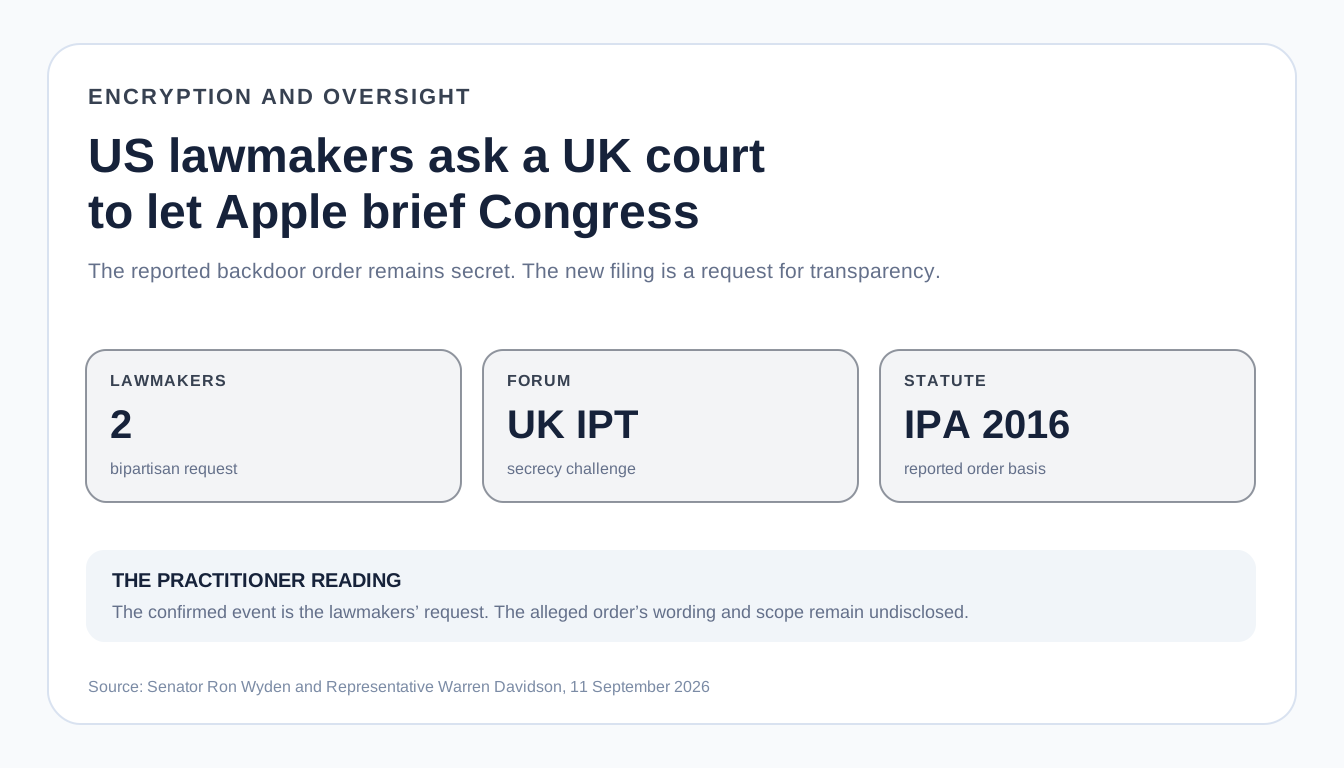
Senator Ron Wyden and Representative Warren Davidson want the Investigatory Powers Tribunal to relax secrecy around Apple’s challenge. The public record confirms the transparency request, not the wording or scope of the reported UK order.
By Parminder Kumar Sharma · · 4 min read

The new development is a request to relax secrecy
US Senator Ron Wyden and Representative Warren Davidson have asked the UK Investigatory Powers Tribunal to let Apple provide Congress with more information about a reported UK encryption demand. Their 11 September letter says Apple told Congress it is challenging the UK government’s authority to issue surveillance directives.
The lawmakers say the UK government permitted Apple to brief the US Attorney General, the Vice President and key staff, while denying permission to discuss the matter in detail with Congress. Their release also says the original reported demand would have affected American Apple users and was later revised after US government pushback. The full scope of the current request remains unknown.
Reporting has linked the alleged demand to powers under the Investigatory Powers Act 2016. The underlying order and proceedings are secret. The public material therefore does not establish its exact wording, technical design, geographic scope or present status.
The confirmed event is the lawmakers’ transparency request and their account of Apple’s response.
Cross-border secrecy creates an oversight gap
The lawmakers argue that a secret demand affecting an American technology provider can create consequences for US users, national security and congressional oversight. They ask the tribunal to permit Apple to share enough information for elected officials to evaluate those consequences.
The dispute is also institutional. UK investigatory powers include secrecy controls intended to protect operations. US legislators say those controls should not prevent their own government from understanding a measure that may affect a US company and communications security.
What each institution controls
| Institution | Publicly stated role | Open question |
|---|---|---|
| UK Government | Reported issuer of the secret demand and controller of disclosure permissions | Exact authority, current scope and technical effect |
| Investigatory Powers Tribunal | Forum for Apple’s challenge | What may be disclosed |
| Apple | Technology provider challenging authority | Technical effect of the reported demand |
| US executive branch | Reportedly permitted to receive limited Apple briefings | What information was shared |
| US Congress | Oversight of US security and companies | Information it may receive |
An exceptional-access mechanism can become a systemic target
The technical concern behind the political request is that a mechanism created for authorised access may alter the security model for every user within its scope. A capability held for exceptional use must still be implemented, controlled and defended against theft, coercion and misuse.
Without the order’s text, it is premature to claim a particular backdoor architecture. The right security questions are conditional: would compliance require weakening end-to-end protection, could it be limited to named accounts, how would access be authorised and audited, and what independent review would detect misuse?
The position
The tribunal can protect operational detail while enabling meaningful democratic oversight. A foreign secrecy rule should not leave lawmakers unable to assess the security consequences for a company and users under their jurisdiction.
Until more evidence is released, coverage should resist filling the gap with certainty. Transparency is the immediate issue, and the reported order’s technical consequences remain an unresolved question.
Sources
- PrimaryWyden and Davidson to UK Spy CourtOffice of Senator Ron Wydenaccessed 2026-09-13
- PrimaryBipartisan letter to the UK Investigatory Powers TribunalUS Congressaccessed 2026-09-13