Tesla Roadster goes airborne and flips: what the launch actually proves
Tesla showed a prototype climbing an inverted ramp and rising on cold-gas thrusters. Here are the three versions, the speed claims and the £50,000 UK reservation schedule. Production performance remains unverified.
By Parminder Kumar Sharma · · 7 min read
A prototype in the air, and a much larger promise
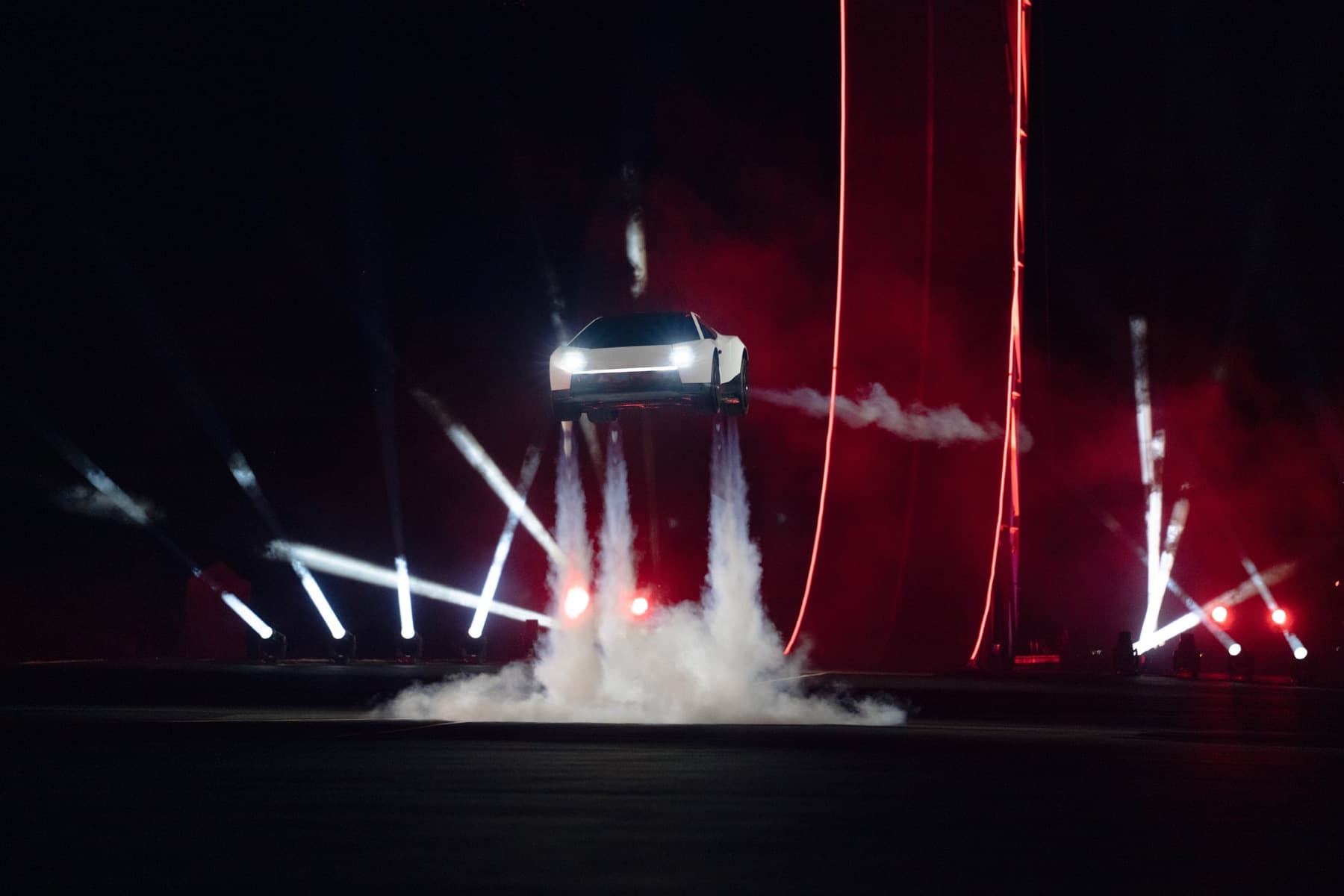
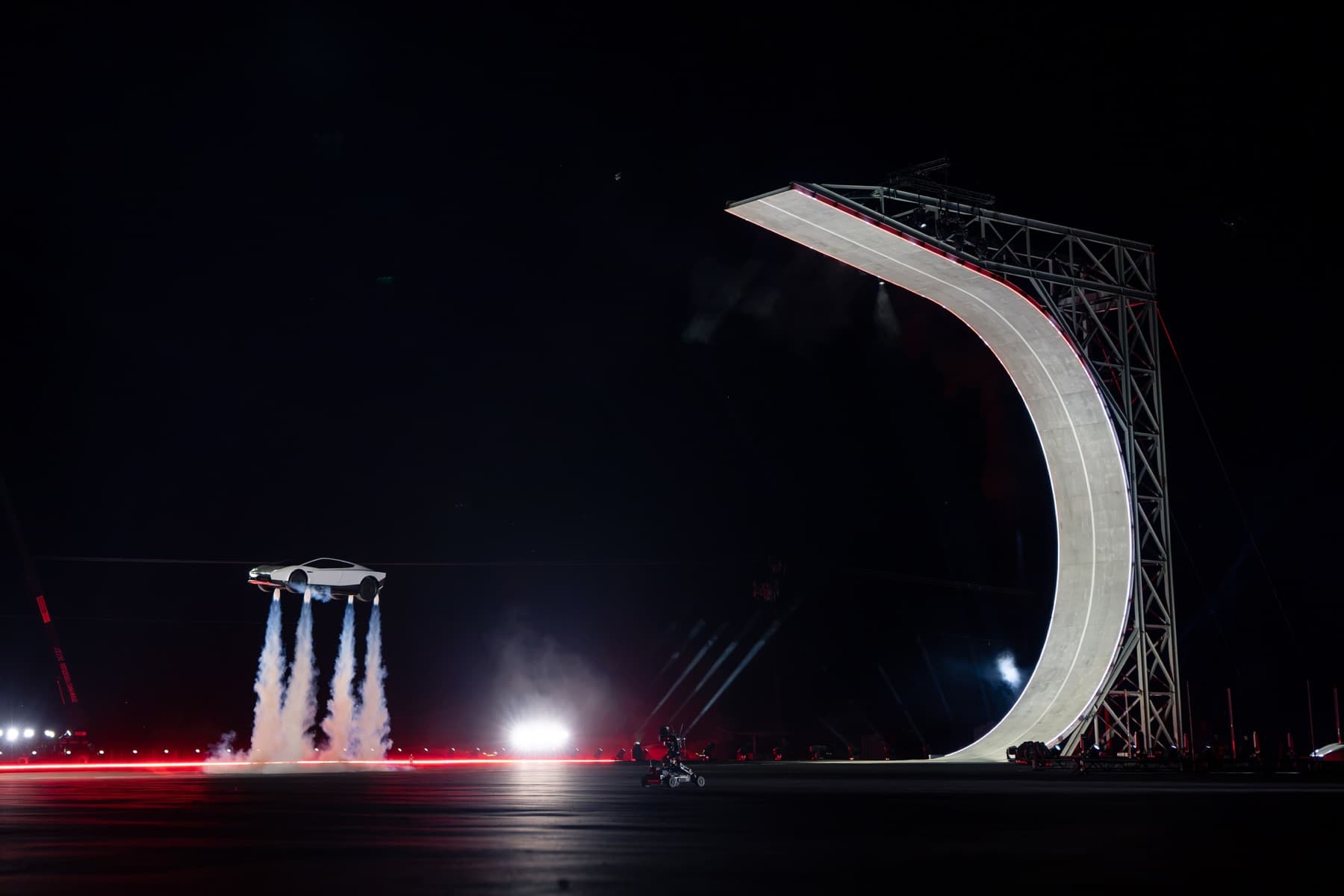
Tesla has shown its next-generation Roadster doing something beyond an acceleration claim. In its 16 October launch posts, the company published footage and images of a white prototype rising on visible gas plumes and rotating away from a steep, curved ramp. The images supplied with this article are Tesla promotional images from those posts. They establish what Tesla chose to demonstrate at a controlled venue; they do not establish that a customer car can repeat the manoeuvre, sustain flight, or operate legally in public airspace.
The central distinction is between a staged demonstration, Tesla’s proposed customer specifications, and independently measured production performance. Only the first is visible in the launch material. The engineering could still change before delivery.
What Tesla showed
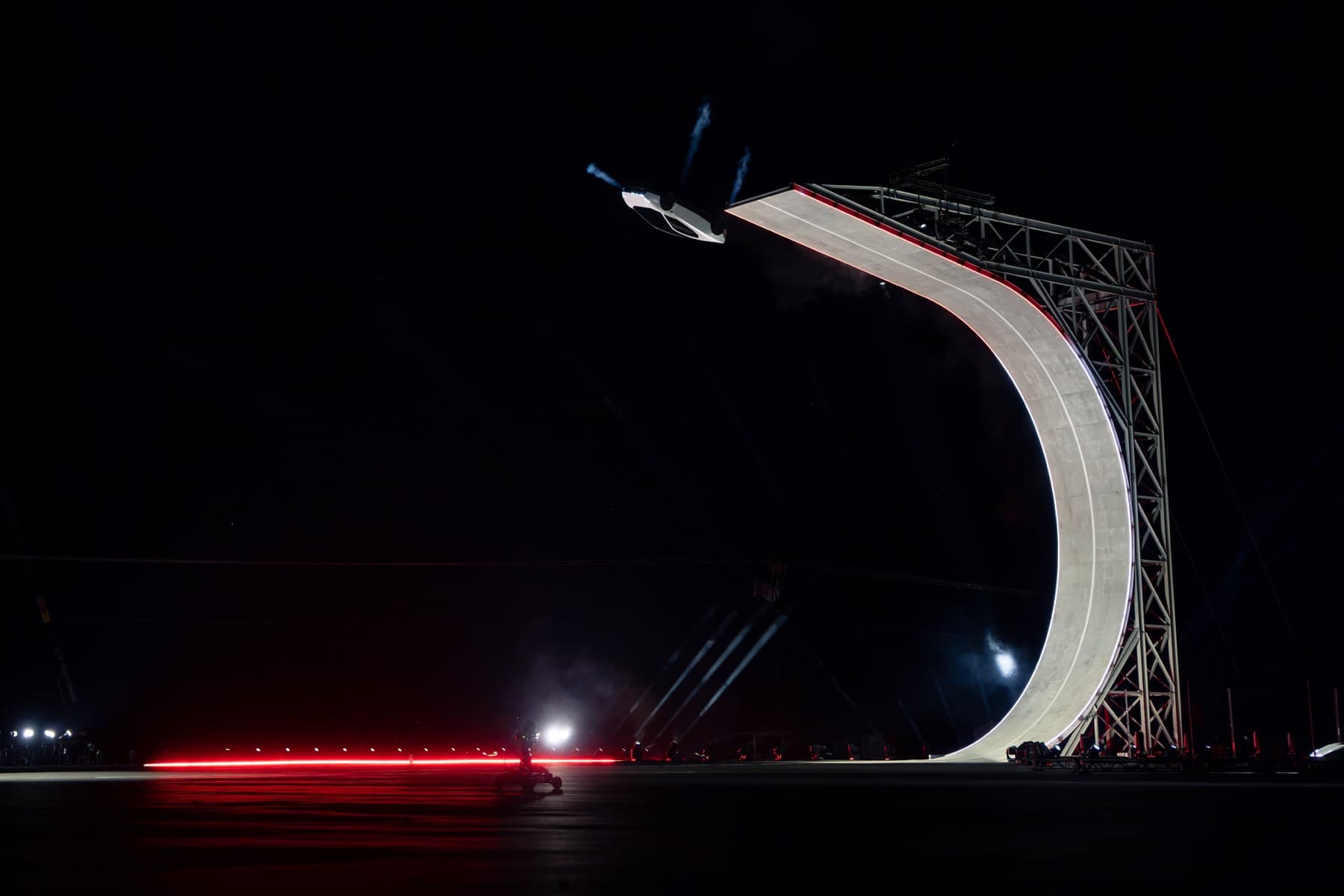
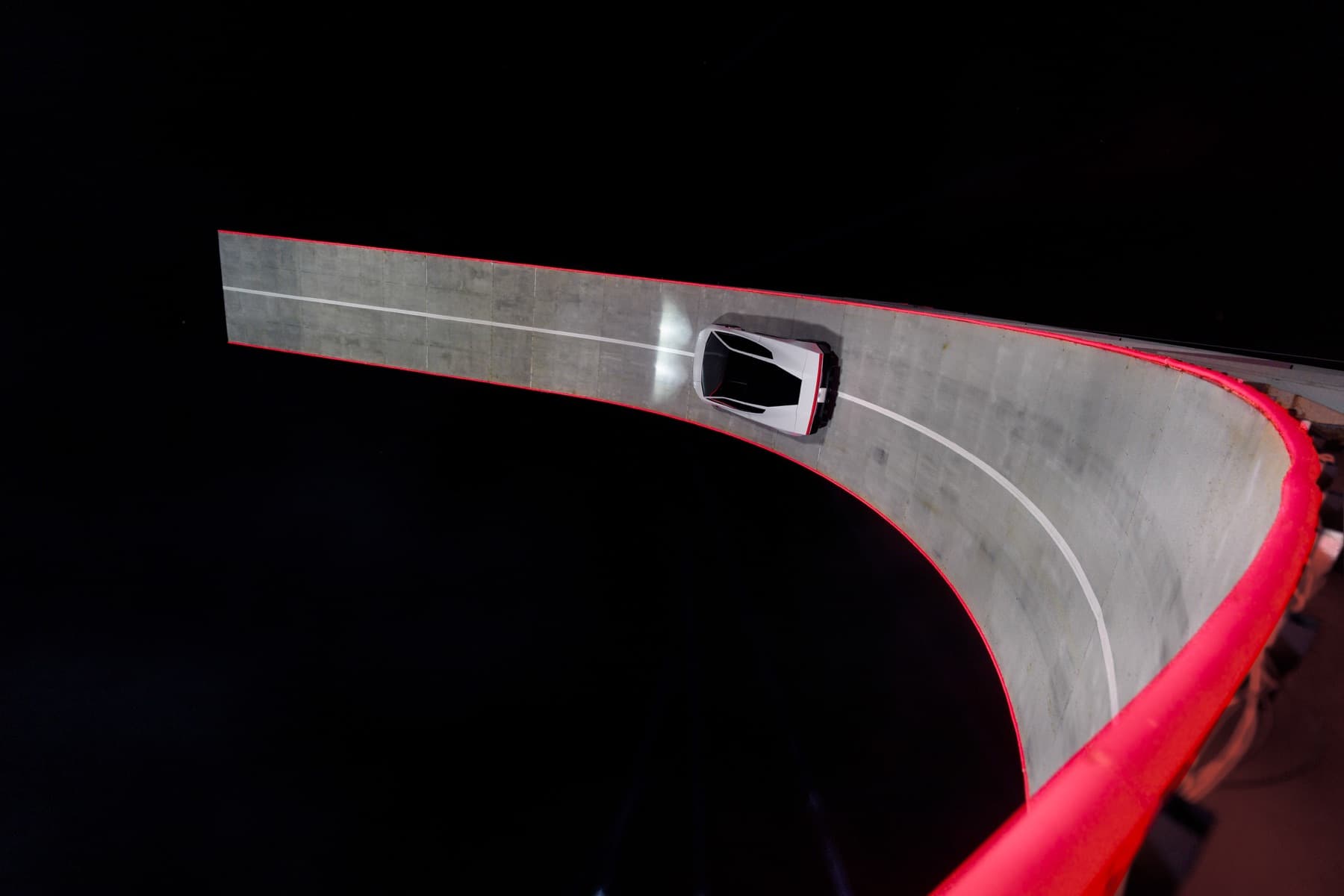
The launch sequence combines two distinct ideas. The Roadster drives up a steep curved structure and appears inverted near the top. After leaving the structure, jets of gas are visible as the vehicle rotates and descends. Separate pictures show it rising vertically above the ground. The images make the stunt unusually clear, but still frames cannot establish the vehicle’s mass, thrust, gas capacity, maximum altitude, duration, landing precision or repeatability.
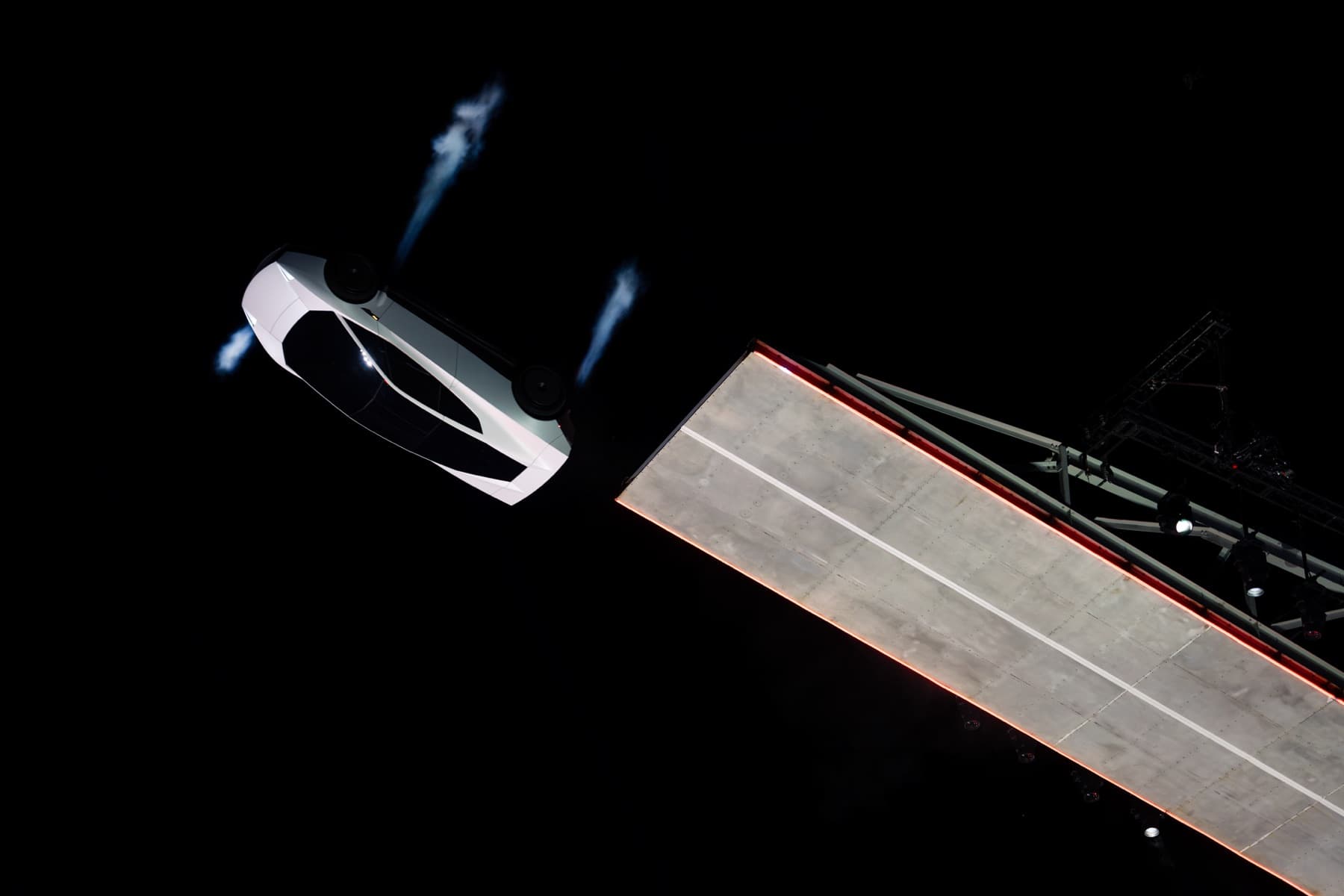
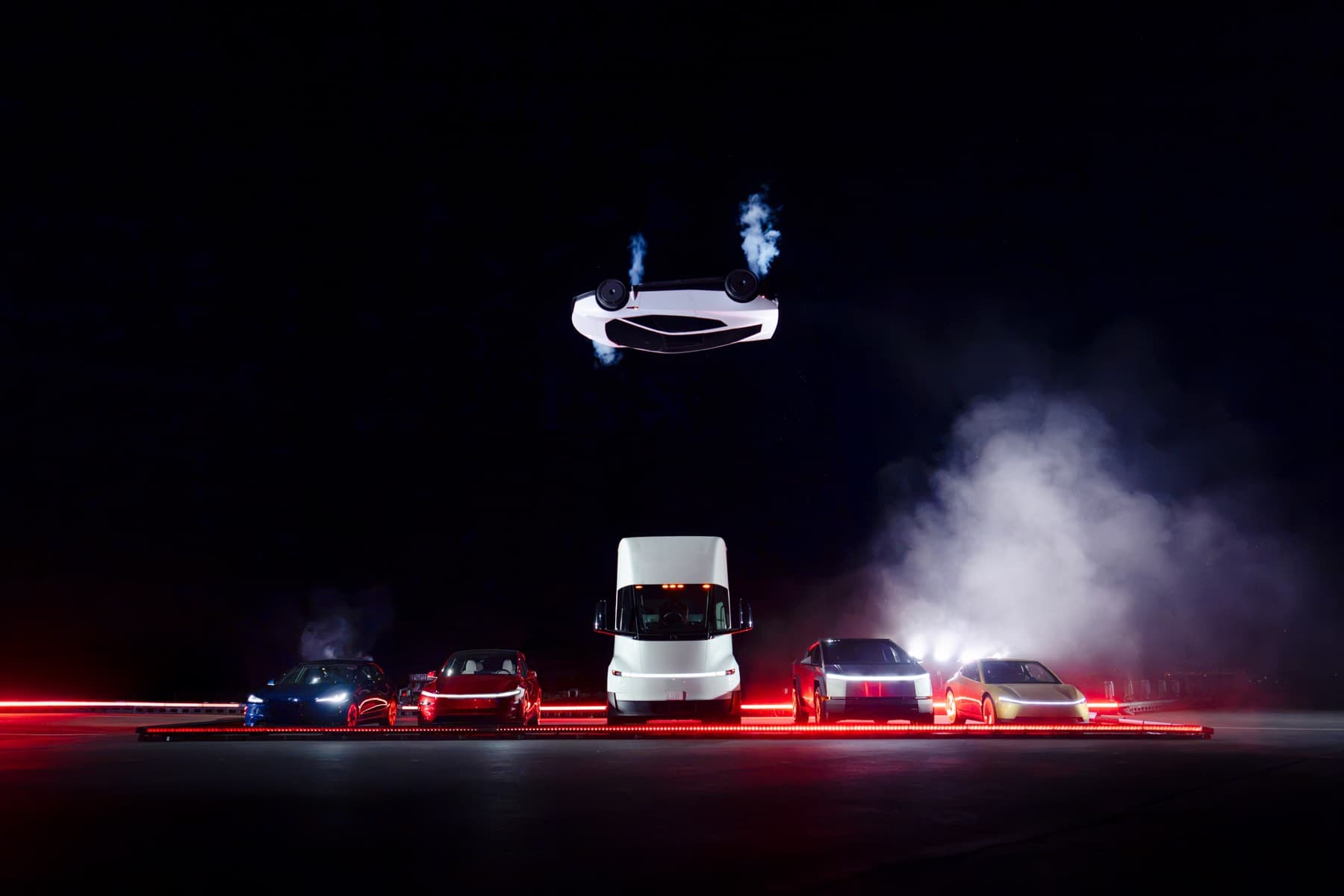
Tesla calls the single-seat Rocket configuration “air ready” and describes perimeter cold-gas thrusters that support upward, forward and rotational movement. The product page also says the thrusters make small adjustments to stabilise the vehicle in flight. It does not publish a certified flight envelope, duration, operating altitude, emergency procedure or approval for aviation use.
Performance, Thrust and Rocket compared
Tesla’s stated configuration plan. Acceleration, range and speed figures are manufacturer claims from the launch material, not independent test results.
| Version | Tesla’s stated specification and status |
|---|---|
| Performance | Two seats; active aero and fan suction. Claimed 0–60 mph under 1.6 s. Described as road ready. |
| Thrust | Two seats; adds rear cold-gas thrusters. Launch claim under 0.9 s; product page says under 1 s. Limited release, race ready. |
| Rocket | One seat; perimeter thrusters for lift and rotation. Claimed 0–60 mph under 0.59 s. Invite only; not approved for public roads. |
Tesla’s configuration post also gives more than 300 miles of range and more than 230 mph top speed for Rocket. Tesla has not provided a UK test-cycle range, independent high-speed run, usable battery capacity, gas pressure or a specification sheet that connects every figure to a defined trim and test condition. The present product page provides the broad hardware description and a Thrust claim of 0–60 mph in under one second. The more precise figures are attributed to Tesla’s launch material.
How the system is meant to work
Tesla describes a multi-mode fan and ground-sealing system that removes air from beneath the car to create downforce even while stationary. That is mechanically different from a conventional wing, whose aerodynamic force depends heavily on airspeed. Tesla says powered fans and active wings add traction and let Track Mode change the car’s suspension and aerodynamic state. Its claim of downforce approaching Formula 1 levels has no published like-for-like measurement here, so it should be read as a manufacturer claim.
For Thrust, rear-mounted cold-gas nozzles are meant to add forward force. Rocket adds nozzles around the car for lift and rotation. Tesla says SpaceX’s spacecraft-thruster experience informed the design, but a car operates in atmosphere, close to people and the ground, with different packaging and safety constraints. Tesla says carbon-fibre overwrapped pressure vessels occupy available spaces in the vehicle; more stored compressed gas would allow longer operation, but no usable gas mass, pressure, refill time or flight duration has been disclosed.
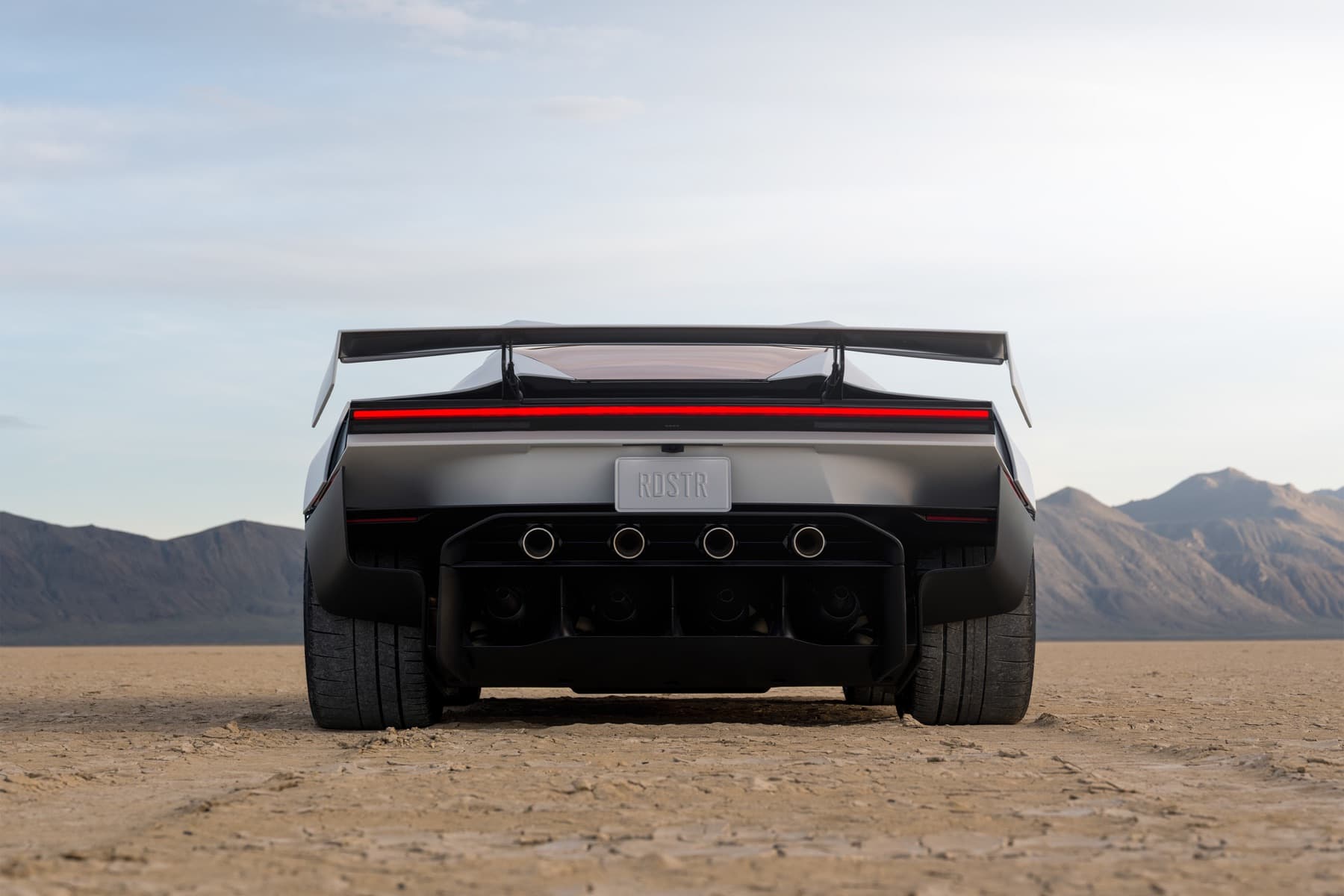
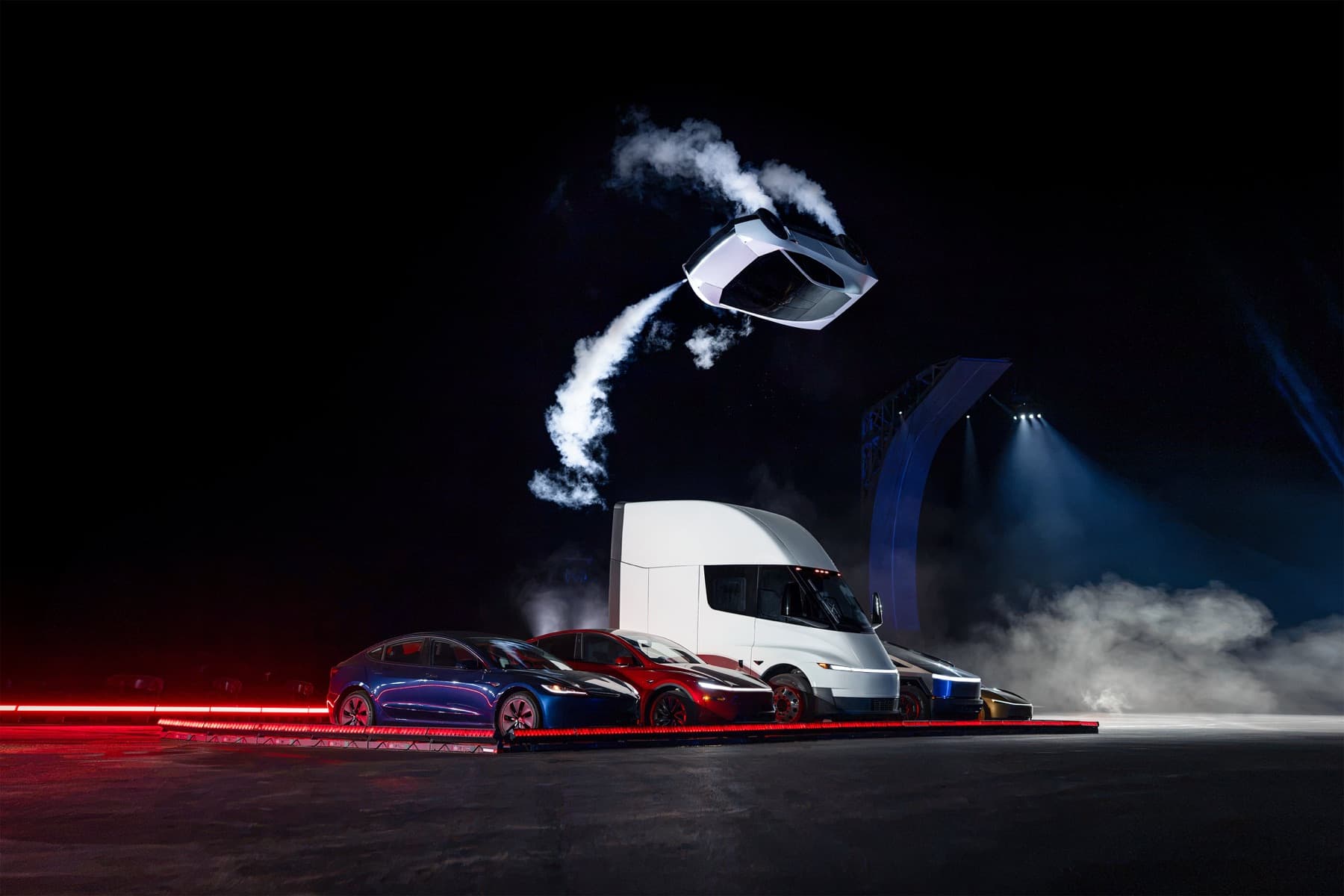
The visible stunt supports a narrow conclusion: Tesla demonstrated a prototype moving through a short, controlled airborne sequence. Whether that scales to a safe, repeatable customer feature depends on tank capacity, structural loads, control redundancy, refilling, crash protection, noise and regulatory approval. Tesla has not released enough data to assess those questions independently.
Roadster design and interior
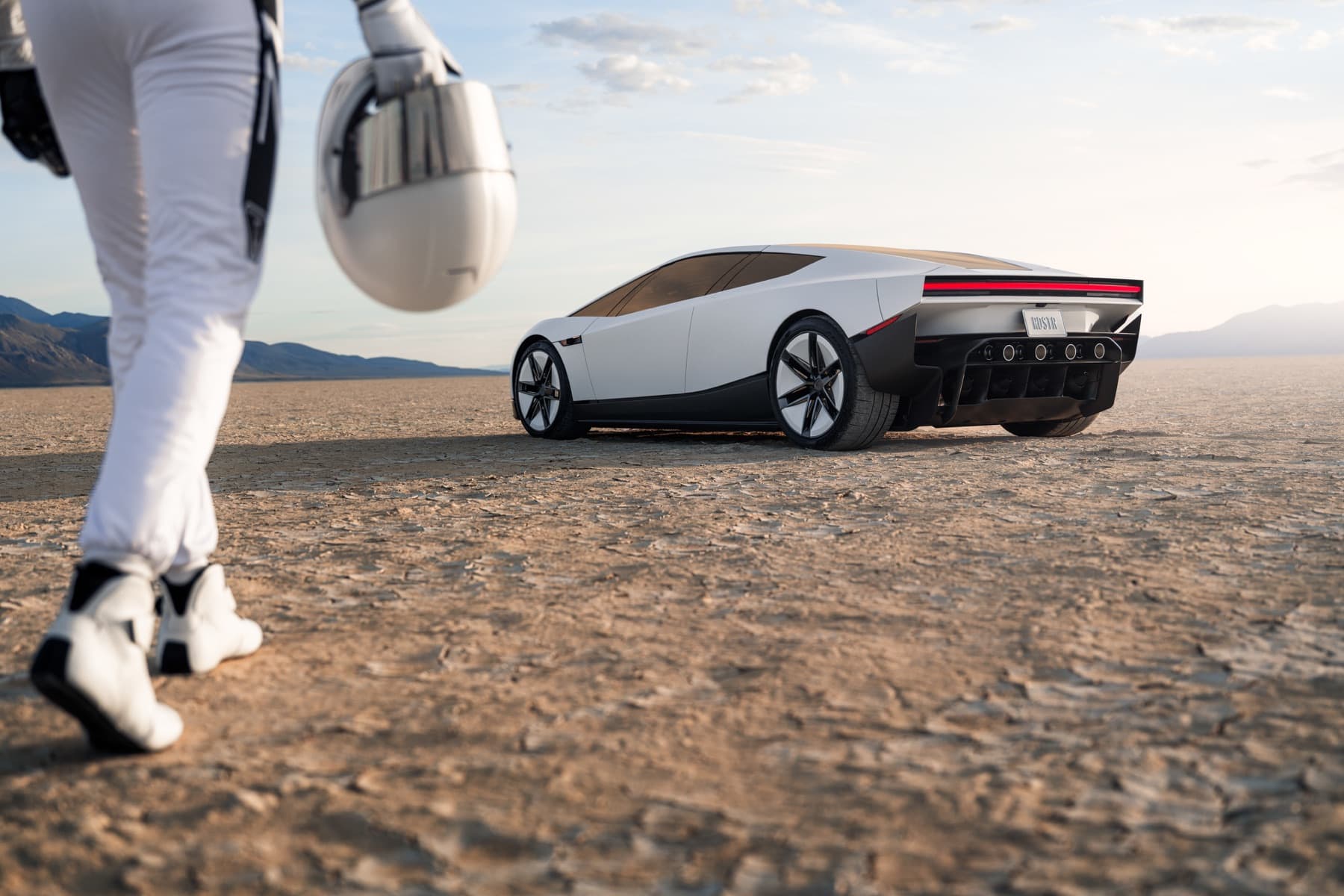
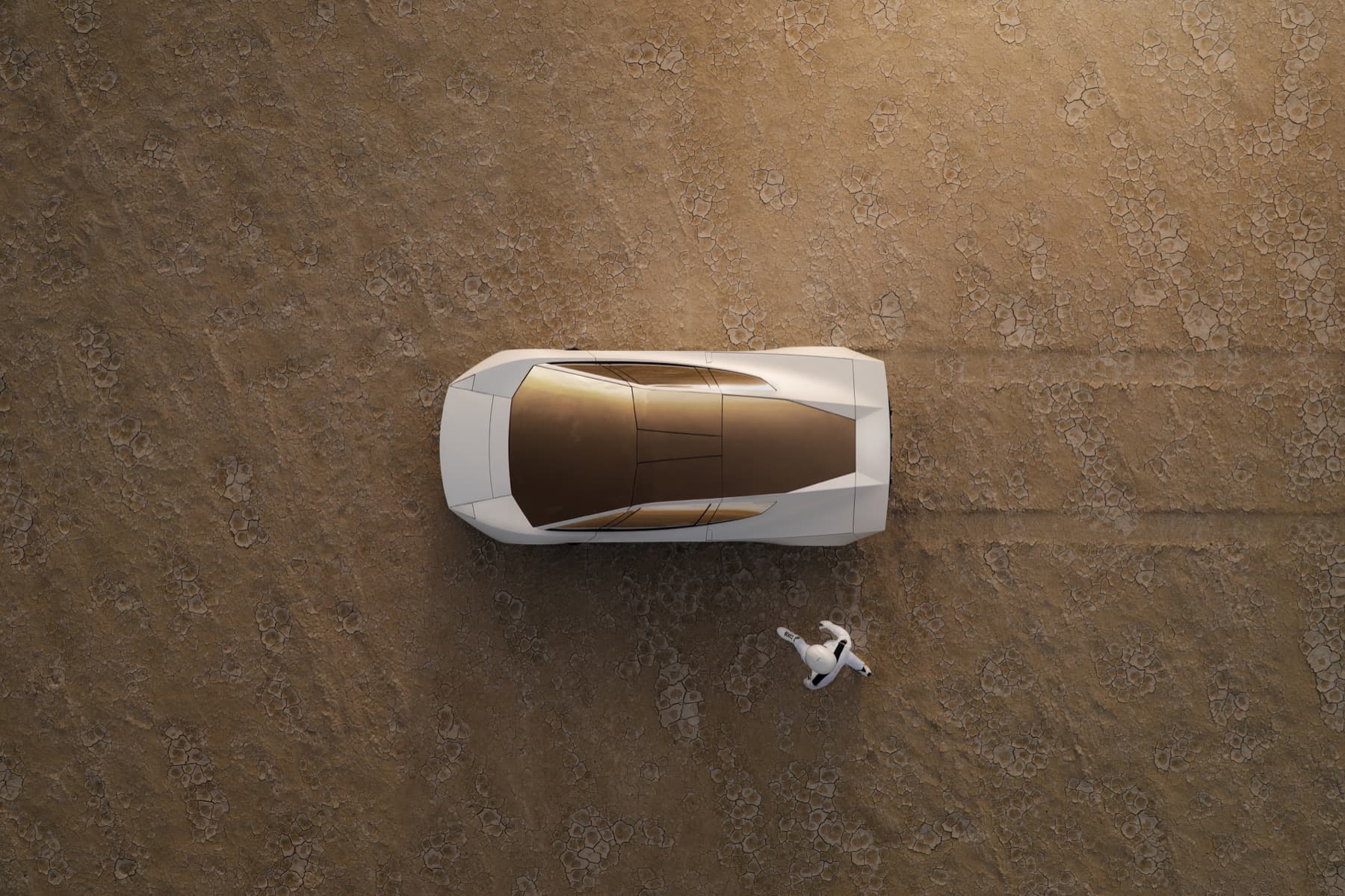
The new shape is lower and more angular than the long-promised 2017 concept. Tesla describes concealed headlamps, a full-width rear light, flush surfaces and lightweight wheels. Its exterior post also names an “Ano White” finish with claimed UV, cryogenic, electrostatic and corrosion properties, and “Gold Glazed” glass inspired by spacesuit visors. The company’s interior post describes a light cabin with microsuede bolsters, manual controls, a fixed seat position and weight-saving magnesium, titanium and carbon fibre. Those material and performance benefits have not been independently tested in a delivered Roadster.
UK reservation: £50,000 committed, price still unknown
On Tesla’s UK reservation page, Performance is selected by default. At the time of checking on 16 October 2026, the page displayed £5,000 due today, marked “fully refundable”, and £45,000 due within 10 days. Tesla says the reservation is not final until payment is received, can be cancelled if the second payment is missed, and that refunds for modifications will not be issued. Thrust is presented as limited; Rocket is disabled and labelled invite only.
Tesla’s Roadster page explicitly says Rocket is not approved for public road use and may be unavailable in some regions. Any interpretation of “it can fly” as permission to drive or launch it on a UK road would go beyond what Tesla has published.
What would change the assessment
This reveal matters because Tesla has now shown a physical airborne stunt and a clearer product split. It could change expectations for extreme performance cars if the customer hardware reaches production. The outstanding proof is a delivered vehicle tested under disclosed conditions: repeatable 0–60 mph runs, independently measured range and speed, published thrust and gas capacity, customer refill procedure, safety case, road approval for relevant trims and any flight permissions.
Evidence boundary as of 16 October 2026.
| Established from primary material | Still unverified |
|---|---|
| Tesla published launch footage and still images of a controlled airborne prototype sequence. | Independent measurement of altitude, duration, acceleration and repeatability. |
| Tesla lists Performance, Thrust and Rocket, with the stated seating and broad hardware differences. | Final production specifications, price and delivery timetable for the UK. |
| UK reservation page shows £5,000 then £45,000 for selected Performance. | Final purchase price, UK type approval, customer flight permissions or Rocket availability in Britain. |
Source and image note: All ten images in this article were supplied by the reader as copies of Tesla launch images and are credited to Tesla. The configuration figures, thruster explanation and Track Mode claim are linked alongside the launch posts: announcement, exterior details, interior details, demonstration clip and kickflip clip are linked for readers to inspect directly. The images and launch footage are promotional primary material, not independent test data.
Sources
- PrimaryRoadster product pageTeslaaccessed 2026-10-16
- PrimaryUK Roadster reservation pageTeslaaccessed 2026-10-16
- PrimaryDo a kickflip! demonstration clipTesla on Xaccessed 2026-10-16
- PrimaryReal life, baby demonstration clipTesla on Xaccessed 2026-10-16
- PrimaryRoadster exterior and engineering postTesla on Xaccessed 2026-10-16
- PrimaryRoadster interior and materials postTesla on Xaccessed 2026-10-16
- PrimaryRoadster announcement clipTesla on Xaccessed 2026-10-16
- PrimaryTesla Roadster configurations and performance figuresTesla on Xaccessed 2026-10-16
- PrimaryTesla Roadster thrusters and pressure vesselsTesla on Xaccessed 2026-10-16
- PrimaryTesla Roadster Track Mode and downforce claimTesla on Xaccessed 2026-10-16