Gemini stopped watching every second of a video. It now decides where to look
Google's agentic video mode searches frames, audio and transcripts, then revisits the useful moments at the resolution the question needs. The reported savings reach 88% fewer tokens and 66% lower cost, but those are benchmark maxima rather than a bill guarantee.
By Parminder Kumar Sharma · · 4 min read
The model has gained a viewing strategy
Most video analysis starts by sampling at a fixed rate. Google gives one frame per second as its default example. That is predictable, but wasteful when the answer depends on a few moments in a long recording, and it can still miss an action completed between sampled frames.
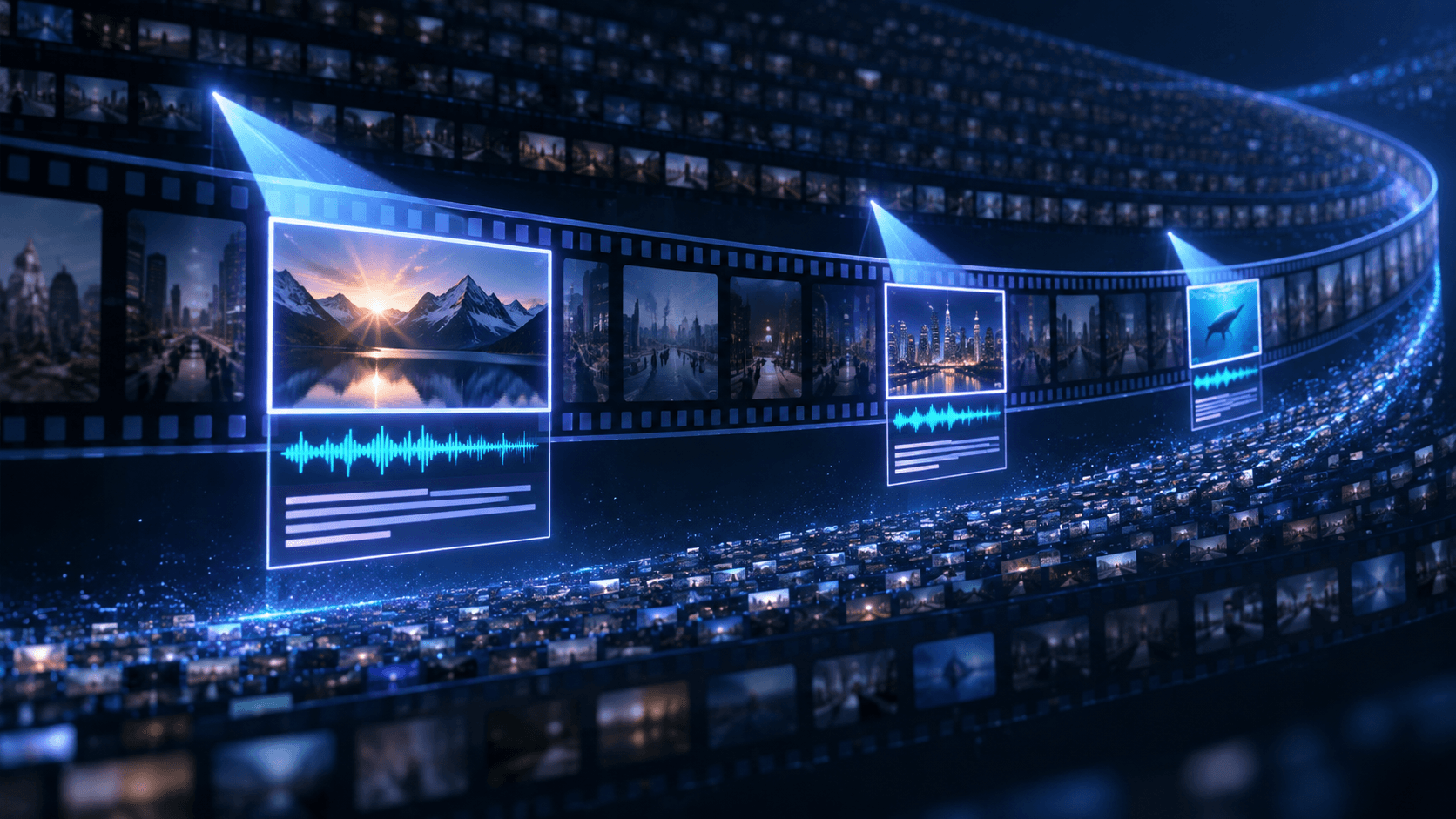
Agentic video understanding changes the order of work. Gemini interprets the question, searches the visual stream, audio and transcript, chooses promising intervals and loads those portions again at an appropriate speed or frame rate. The model is using an internal video tool inside a loop: search, inspect, revise the search, then answer.
Google launched the mode for Gemini 3.7 Flash, 3.6 Flash and 3.5 Flash-Lite. It supports uploaded videos and YouTube videos through the Gemini API in Google AI Studio and the Gemini Enterprise Agent Platform. Developers enable it by setting video processing to agentic, and Google says there is no feature surcharge beyond normal Gemini API token pricing.
A 90-minute safety recording makes the difference concrete
Suppose a manufacturer asks: "When did the operator remove the guard, and was the machine still moving?"
A fixed one-frame-per-second pass prepares roughly 5,400 visual samples before it knows which ten seconds matter. A lower rate costs less but may jump over the hand movement. The agentic approach can search the transcript for discussion of the guard, scan for the machine and operator, identify candidate windows, then replay those windows at a higher frame rate. It spends detail where the evidence is likely to be.
That strategy also explains Google's claimed sub-second moment retrieval, better anomaly detection and more accurate counting. The system can slow down around a rapid event or revisit a segment when the first observation is ambiguous. It resembles an investigator scrubbing a timeline, except the model decides how to scrub.
Static sampling and agentic inspection fail in different ways.
| Method | Strength | Failure to test |
|---|---|---|
| Fixed-rate sampling | Predictable coverage and cost | Important motion may happen between frames; long videos create large token loads |
| Agentic scanning | Concentrates tokens on relevant intervals and modalities | A poor search plan can ignore the decisive interval before close inspection begins |
| Transcript-only search | Fast for spoken facts | Misses silent actions, on-screen text and visual contradictions |
| Human review | Understands operational context and consequence | Slow at scale and inconsistent without a review protocol |
Efficiency moves the control point
A production system should keep the moments the model inspected, their timestamps, the sampling rate used and the answer's evidence clips. Otherwise a cheaper answer becomes harder to audit. High-consequence uses should also include a fallback pass or human review when the model reports that an event did not occur. Absence is the harder claim because the agent may simply have searched the wrong place.
Privacy also changes when a model can search multi-hour recordings cheaply. Organisations should apply retention, access and purpose controls before sending meetings, CCTV or customer recordings to any video service. Lower token cost increases the amount of material that teams will be tempted to analyse.
The P.K. view
The important product change is agency over attention. A video model no longer needs the developer to choose one sampling rate for every question. It can spend computation according to the task.
That is a useful design pattern beyond video: make a cheap pass, form a hypothesis, acquire better evidence only where needed, and expose the evidence path. The cost claims will vary in real workloads, so teams should replay their own representative videos and measure tokens, latency, answer quality and missed events.
If the model saves 80% of tokens but cannot show what it watched, the organisation has bought efficiency and lost assurance. The best implementation keeps both.
Sources
- PrimaryIntroducing agentic video understanding with GeminiGoogleaccessed 2026-09-14
- PrimaryVideo understanding documentationGoogle AI for Developersaccessed 2026-09-14